

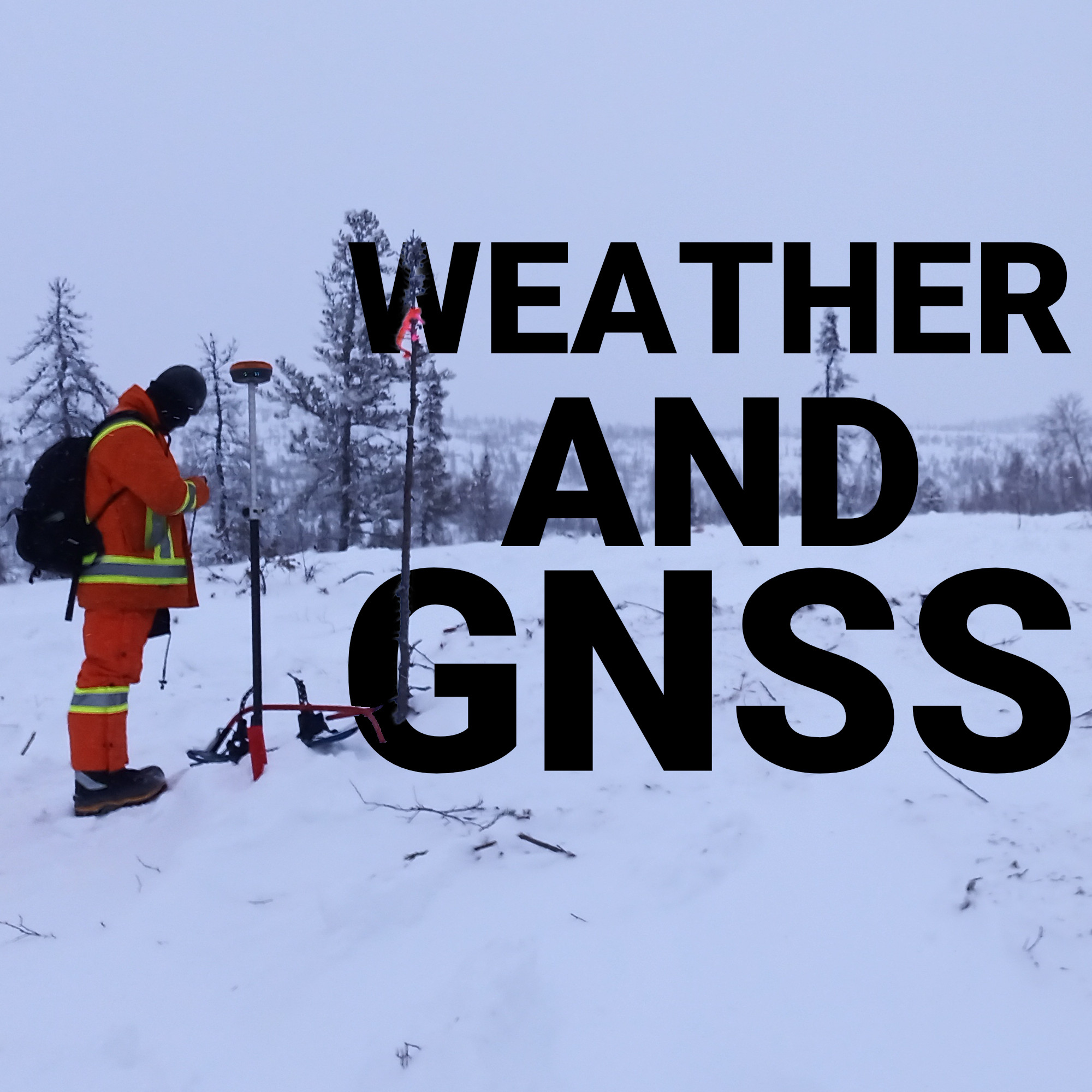
Ask a surveyor in Fort McMurray in January and one in Kelowna in July about their RTK fix, and you’ll get two very different stories, even though they’re running the same class of equipment. That’s because GNSS accuracy isn’t just a function of your receiver’s specs, it’s a running negotiation between your hardware and the atmosphere above it.
Canada makes that negotiation harder than almost anywhere else. A single crew might work through a prairie winter, a coastal rainy season, and a solar storm’s aftermath, all within the same fiscal year. Knowing how each of those conditions actually degrades your fix, and what separates a receiver that shrugs it off from one that doesn’t, is the difference between trusting your data and second-guessing it in the field.
The Ionosphere Doesn’t Care About Your Deadline
Rain, Cloud, and Snow: What Actually Gets Through
Tropospheric Delay: The Quiet Accuracy Killer
Seasonal Patterns Worth Planning Around
What Actually Protects Your Fix in Bad Weather
Building a Workflow That Doesn’t Flinch When the Sky Does
GNSS signals travel from satellites roughly 20,000 km above the Earth, passing through the ionosphere on the way down. Under normal conditions that delay is predictable and correctable, receivers apply standard models and the error washes out. During solar storms and periods of high solar activity, though, the ionosphere becomes turbulent, and the signal delay becomes erratic rather than consistent.
Canada sits at a disadvantage here simply due to geography: northern latitudes are more exposed to ionospheric disturbance and auroral activity than equipment operating closer to the equator.
Crews working in northern Ontario, the Prairies, or anywhere near the auroral zone will see this show up as longer initialization times, more frequent loss of fix, or float solutions that won’t resolve to RTK fix at all. It’s not random bad luck, it’s a predictable geographic reality of doing precision positioning work this far north.
During periods of elevated solar activity, even well-equipped crews may need to build extra time into their schedule for re-initialization, or shift sensitive work to a window when conditions are calmer.
There’s a persistent myth that heavy weather blocks GNSS signals outright. It doesn’t, but it does degrade them, and the degradation isn’t uniform across weather types. Here’s what’s actually happening in each condition:
For Canadian crews, that last point matters more than people expect. A lot of “bad fix” complaints in February are really just an antenna that needs to be brushed off and a connector that needs inspecting, not a limitation of the receiver.
It’s worth building a quick visual check into your setup routine during winter months, snow and ice accumulation is easy to miss when you’re focused on getting a fix and moving to the next point.
Wind is a factor that rarely gets discussed but deserves a mention too. On a pole-mounted setup in open, exposed terrain, common across the Prairies and much of rural Canada, strong gusts can introduce enough physical movement in the antenna to affect measurement stability, particularly for control-point work where millimetre-level consistency matters.
A stable tripod setup or a shortened observation window can offset this, but it’s a variable worth accounting for rather than ignoring.
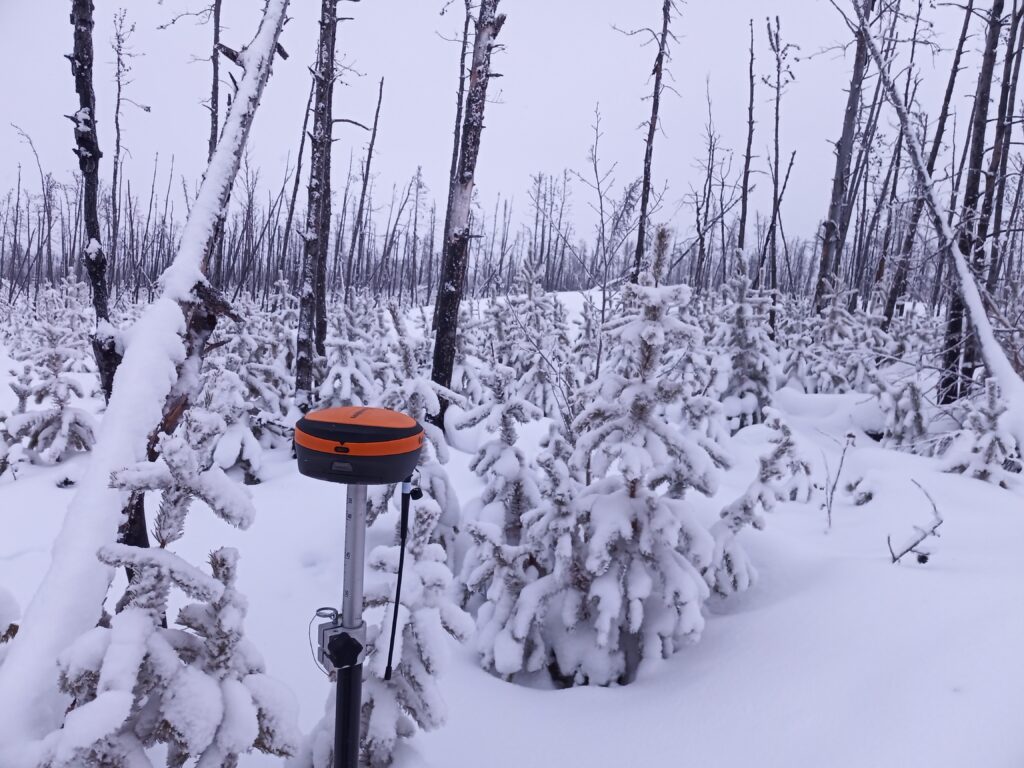
While the ionosphere gets most of the attention, the troposphere, the lowest layer of the atmosphere, causes its own signal delay based on humidity and temperature.
This matters a lot in Canada because of how dramatically those two variables swing seasonally and regionally. A humid summer day on the coast and a dry, cold winter morning on the Prairies produce very different tropospheric conditions, and a receiver that isn’t correcting well for both will show inconsistent vertical accuracy between the two.
Conditions that tend to worsen tropospheric delay:
Modern dual and multi-frequency receivers correct for a large portion of this automatically, but the correction quality varies meaningfully between manufacturers, which is part of why two receivers with similar published specs can behave differently on the same job site.
Vertical accuracy tends to be more sensitive to tropospheric error than horizontal, so if you’re noticing elevation data that seems slightly off on humid days but fine on dry ones, tropospheric delay is a reasonable first place to look before assuming a hardware fault.
Beyond the physics of any single weather event, there’s value in thinking about GNSS performance as something that shifts predictably through the Canadian calendar.
None of this means field work needs to stop when conditions aren’t ideal, it means the crews who plan for these patterns tend to spend less time troubleshooting and more time actually collecting usable data.
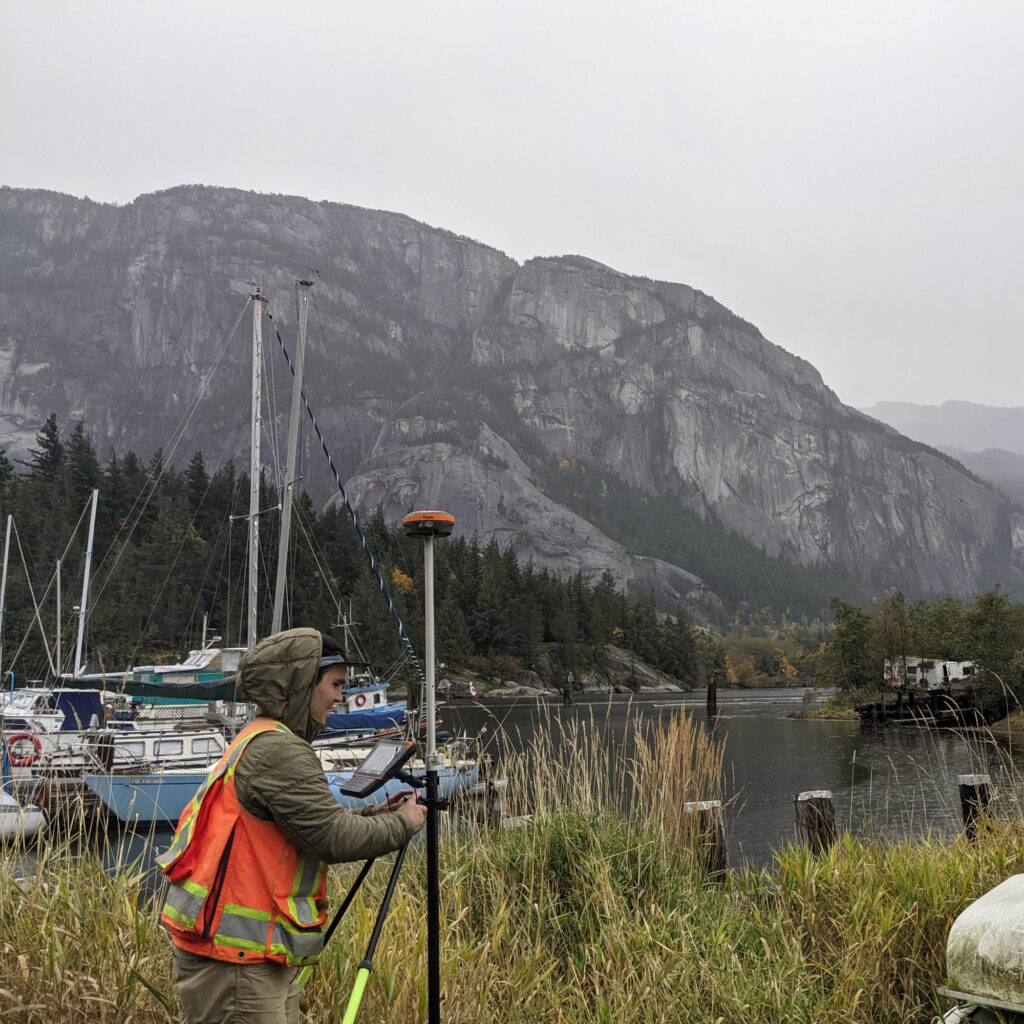
The good news is that weather-related accuracy loss is largely a solved problem, provided the equipment is built for it. A few things make the biggest practical difference for crews working Canadian conditions:
This is where equipment selection matters as much as technique. At Bench-Mark, we spend a lot of time helping surveying and construction crews match receiver capability to the actual conditions they’ll be working in across Canada, not just the conditions on a spec sheet.
A receiver that performs beautifully in a controlled test environment isn’t always the one that holds a fix reliably through a Manitoba spring or a coastal atmospheric river event, and that gap only becomes obvious once you’re standing in the field with a deadline.
It’s also worth remembering that GNSS accuracy is a system-level outcome, not just a receiver spec. The correction service you’re subscribed to, the field software translating raw positioning into usable data, and even how well the crew understands what a degraded fix looks like on screen all factor into whether weather actually costs you accuracy or just costs you a few extra minutes of patience.
Weather will always be a variable you can’t control, but it doesn’t have to be one that controls your data quality. Crews that consistently get reliable results in tough Canadian conditions tend to do a few things well: they choose receivers built for multi-constellation tracking rather than the cheapest available option, they keep antennas and cabling properly maintained through the winter months, and they understand which conditions genuinely threaten their fix versus which ones just look intimidating.
GNSS accuracy in the field is about running equipment that was designed with imperfect weather in mind from the start. Get that part right, and a stormy Tuesday in Saskatchewan starts looking a lot less different from a clear one in July.
