Home > Surveying Equipment > Survey Drones
Why trust Bench Mark
Choosing the right survey drone involves more than comparing specifications. Accuracy requirements, project deliverables, RTK workflows, software compatibility, and operational efficiency all play crucial roles in selecting the right system.
At Bench Mark, we work with surveyors, engineers, construction professionals, and geospatial teams to help identify drone solutions that match real-world project requirements. From highly portable platforms such as the DJI Mavic 3 Enterprise RTK to advanced systems like the DJI Matrice 400 Survey Drone, we help customers evaluate the technology best suited to their workflow.
Backed by years of experience in GNSS, RTK, and geospatial applications, our team provides practical guidance before and after the sale to help ensure long-term success with your survey drone investment.
LiDAR (Light Detection and Ranging) and photogrammetry are two distinct surveying techniques. LiDAR drones use laser pulses to measure distances to objects on the ground, creating highly accurate point clouds. Photogrammetry drones, on the other hand, capture high-resolution images and use software to create 3D models by analyzing the overlapping images. LiDAR is ideal for capturing elevation and terrain data with precision, while photogrammetry excels in creating detailed visual models.
LiDAR-equipped drones offer several advantages for surveying:
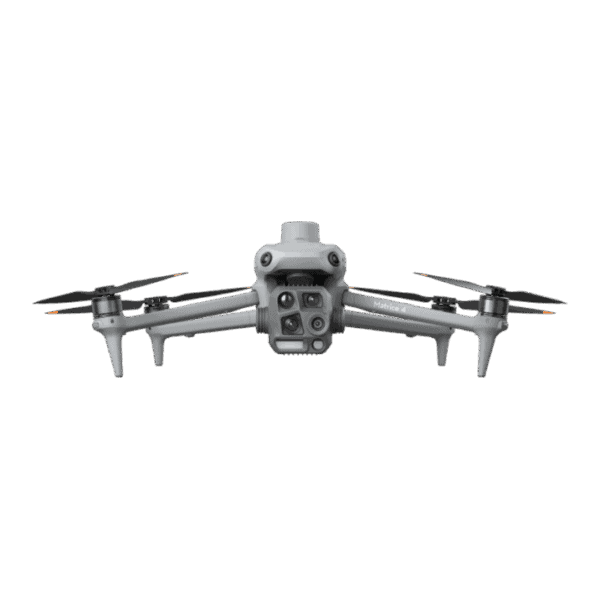
Yes, and it’s one of the strongest use cases for dedicated photogrammetry drones like the DJI Matrice 4E, which fires its mapping camera every 0.5 seconds and uses 5-directional oblique capture specifically to capture building facades and vertical structures, not just top-down terrain. Combined with processing software like DJI Terra, this produces detailed, measurable 3D models suitable for architectural, construction progress, and infrastructure inspection work.
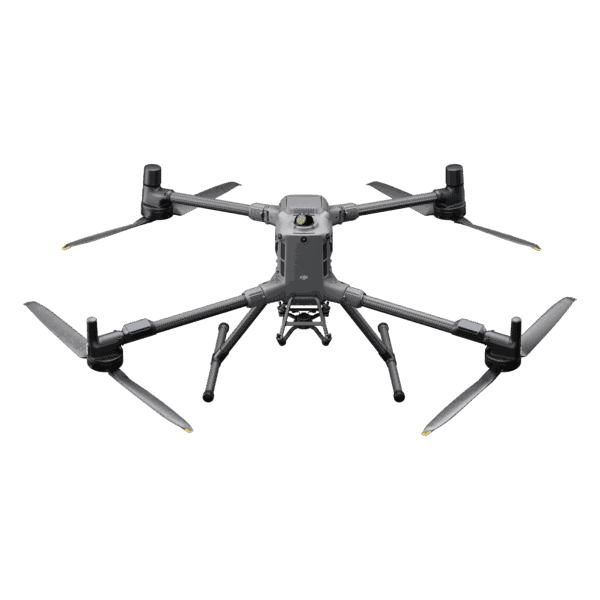
The DJI Matrice 400 and Matrice 350 are payload-flexible platforms that accept LiDAR sensors (including the Zenmuse L1 and L2) alongside camera payloads, so they cover both LiDAR scanning and photogrammetry depending on what you attach. The DJI Matrice 4E and Mavic 3 Enterprise RTK are built around a fixed, integrated mapping camera and don’t accept a separate LiDAR payload, they’re purpose-built photogrammetry platforms. If your work regularly needs both capture methods, a modular platform like the Matrice 400 avoids owning two separate drones.
Yes. In Canada, drone operations are regulated by Transport Canada under the Canadian Aviation Regulations. Operating a survey drone typically requires a valid RPAS pilot certificate (Basic or Advanced, depending on airspace and proximity to people), drone registration, and compliance with airspace restrictions, including additional permissions for flights near airports or in controlled airspace. Requirements can vary depending on your province and specific project location, so confirm current rules with Transport Canada before conducting survey drone operations.
Dedicated to outstanding quality
We offer cutting-edge drone solutions, including those by DJI like the Mavic 3 and Matrice 350. These drones are capable of taking multiple different payload solutions to meet your needs. This includes multiple LiDAR and camera options. Whether you require LiDAR for detailed terrain mapping, high-resolution cameras for aerial photography, or specialized sensors for industrial inspections, we offer a comprehensive selection of payload solutions compatible with these DJI drones. These payloads are designed to seamlessly integrate with survey drones, ensuring reliable and precise data collection.
4 Platforms, Compared by Capture Method
The biggest choice isn’t brand, it’s whether you need a modular platform that accepts LiDAR payloads or a dedicated photogrammetry drone with a fixed camera. Each name links to the full product page.
Drone | Best For | Capture Method | Flight Time |
Large-scale LiDAR and multi-sensor mapping missions, up to 7 payloads | LiDAR + photogrammetry (modular payloads) | 59 min | |
Established modular platform for LiDAR or camera-based mapping | LiDAR + photogrammetry (modular payloads) | 55 min | |
High-frequency topo and as-built capture on large sites | Photogrammetry only (built-in camera) | 49 min | |
Portable mapping for smaller sites and fast deployment | Photogrammetry only (built-in camera) | 45 min |

Trust Bench Mark with Your Projects
Bench Mark supplies professional survey drones and drones for surveying for mapping, photogrammetry, GIS, and infrastructure inspection. Popular models available for order include the DJI Matrice 400 Survey Drone, DJI Matrice 350 Enterprise RTK, DJI Matrice 4E RTK, and DJI Mavic 3 Enterprise RTK. Each system is selected for accuracy, flight stability, and real-world surveying performance.
We support every purchase with expert product guidance and responsive technical support to keep your operations running smoothly. From new enterprise UAVs to select used systems at competitive pricing, Bench Mark delivers reliable drone solutions for professional surveying applications.