

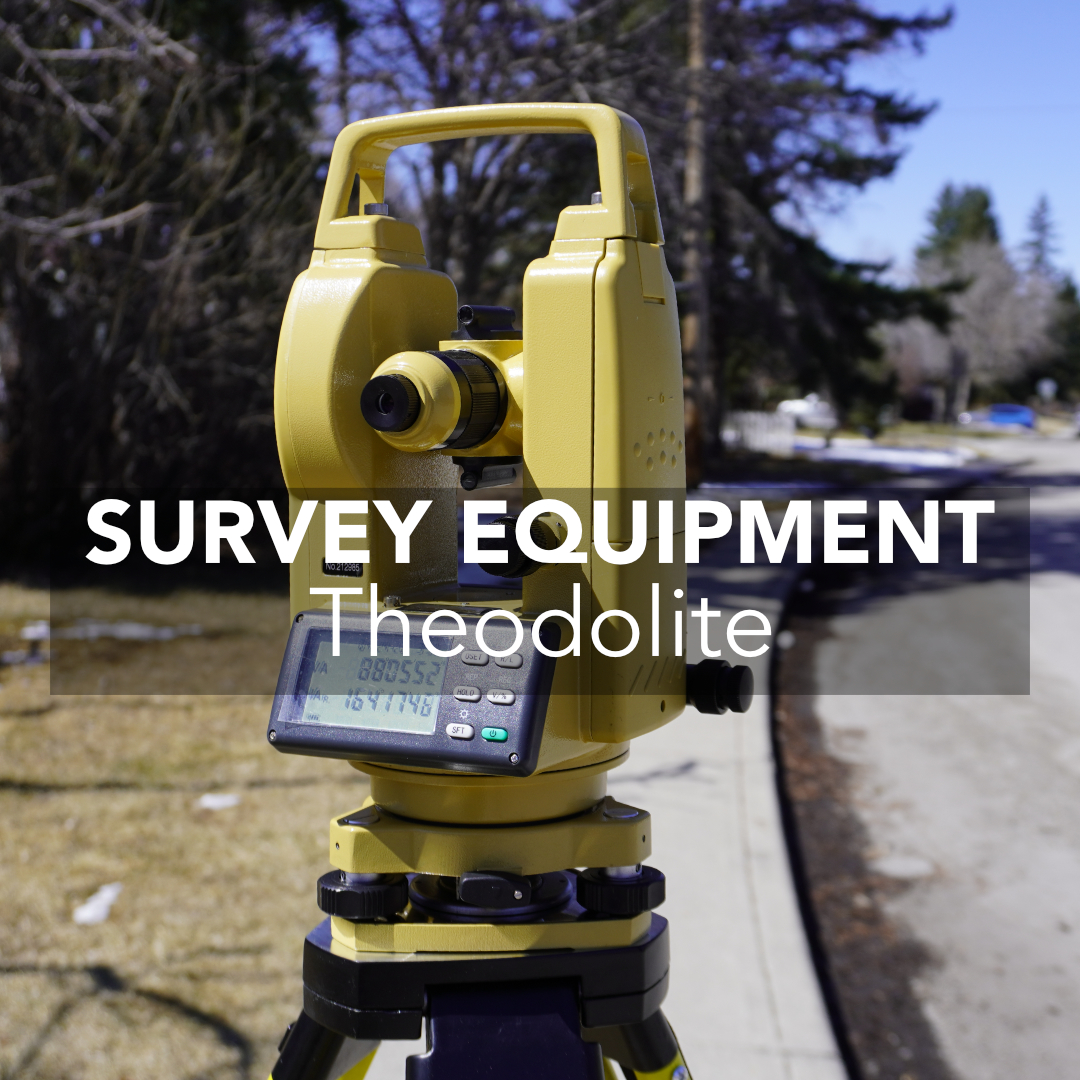
In most Canadian survey workflows today, RTK GNSS and robotic total stations carry the majority of the workload. They’re fast, efficient, and designed for one-person crews, exactly why systems like the Hemisphere S631 dominate daily field operations. But there are still situations across Canada where a straightforward theodolite remains the more reliable option. Not because it’s old, but because angle-based measurements sometimes outperform anything dependent on satellites or EDM.
The real question Canadian surveyors face isn’t “total station or GNSS?”, it’s when is a theodolite the right tool for the conditions?
Why Theodolite Surveying Still Matters in Canada
Where Theodolites Outperform GNSS and Total Stations in Canada
How Theodolites Fit Into Modern Canadian Survey Workflows
Why Angle-Only Tools Still Perform So Well
How a Theodolite Strengthens Your Overall Survey Setup
Theodolites as a Quality Tool in Canadian Surveying
Project Types in Canada Where Theodolite Surveying Still Makes Sense
When a Theodolite Is the Better Choice
Final Thoughts
Canadian survey environments are rarely ideal. Forest canopy, steep slopes, dense steel, and downtown corridors can all break GNSS workflows. Often, when you’re in the middle of layout or verification. A theodolite cuts through these conditions because it’s resistant to the two things that disrupt modern systems most: blocked sky and reflective surfaces. Surveyors still rely on theodolites for three reasons that show up again and again in Canada:
Outside of ideal open-sky conditions, these advantages matter a lot more than most people admit.
Downtown Vancouver, Calgary, Toronto, and Montréal are difficult environments for GNSS. Tower cranes, scaffolds, reflective facades, and metal structures all destabilize fixes. If you’re aligning formwork, checking a grid, or confirming a baseline next to structural steel, a theodolite will often give the cleanest result of the three major instrument types.
A large portion of Canada involves variable sky visibility. Under canopy, along steep rock faces, or on small sites in the North, GNSS simply can’t guarantee consistent results. A theodolite doesn’t care about satellite visibility. It measures angles reliably, whether you’re in the woods, tucked against a slope, in a building or setting up in a narrow clearing.
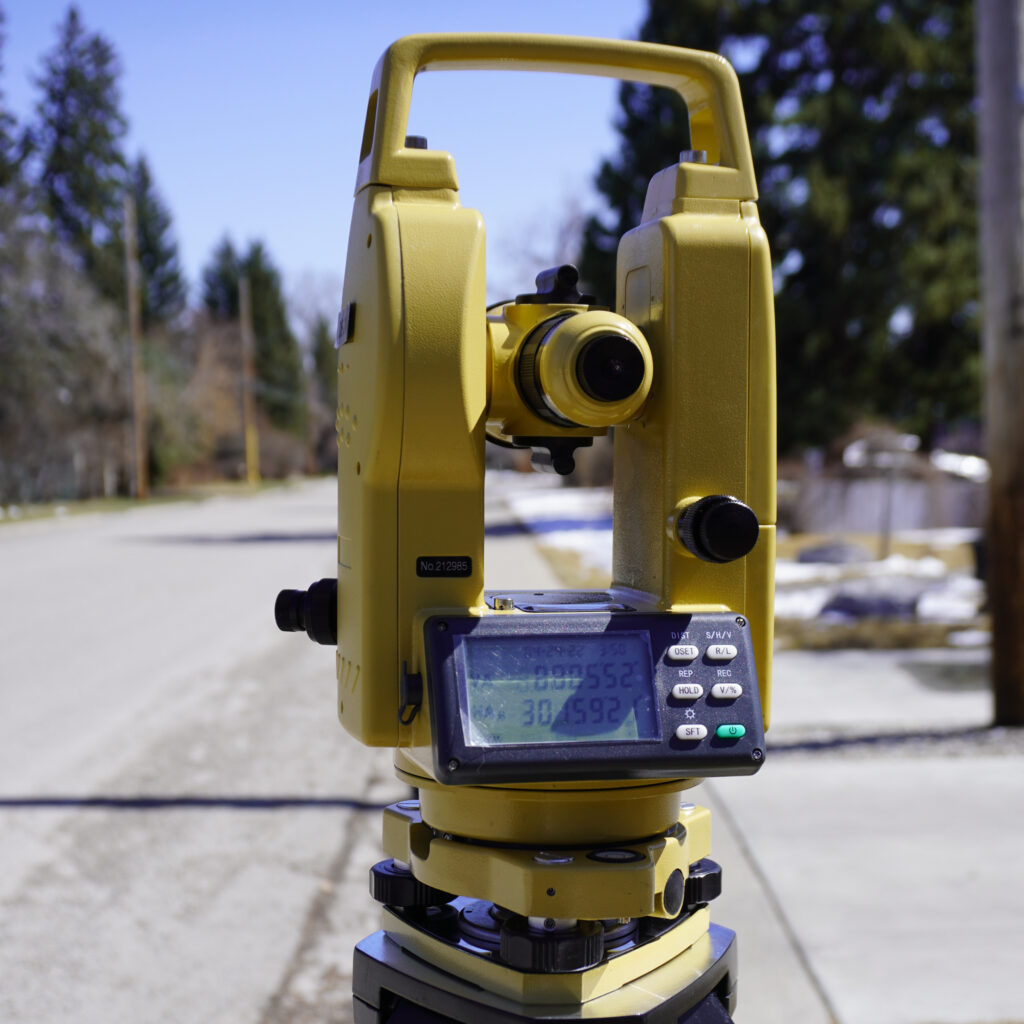
Legal descriptions across Canada still rely heavily on bearings and angles. Even if GNSS establishes the coordinate framework, theodolites help connect new data with older cadastral descriptions and confirm relationships between control points. When a boundary retracement needs defensible angular checks, surveyors still reach for a theodolite.
Theodolites aren’t standalone tools anymore; they’re used as a complement to RTK GNSS and total stations. A typical workflow looks like this:
This hybrid approach is common because Canadian sites change hour by hour. Having a theodolite in the mix keeps the field crew productive instead of waiting for conditions to improve.
Theodolites remain relevant because their measurement mechanics are simple, predictable, and stable. Modern RTK systems rely on continuous signal tracking and correction streams; robotic total stations depend on line-of-sight and clean EDM returns.
Theodolites, on the other hand, measure geometry directly. There are no correction links to drop, no prisms to reflect poorly, and no satellite constellation issues to navigate. For many Canadian firms, especially those working in forested land development or mixed-use construction, this simplicity is a safeguard.
A theodolite isn’t meant to replace your GNSS or robotic total station. It’s meant to support them. It’s the part of your toolkit that gives you clean geometry when your primary system is dealing with uncertainty. If your GNSS receiver struggles with sky visibility or your total station is fighting reflections, a theodolite gives you a stable reference you can trust.
The real value shows up in how it helps maintain consistency across your entire workflow. A theodolite lets you confirm baselines, check angles, and validate setup positions without interrupting the rest of your equipment. This is especially useful when your control network spans different terrain types: clearings, tree lines, tight corners, or areas with heavy equipment.
It’s also one of the easiest tools to integrate into a fast-moving field day. You don’t need to wait for a fix, adjust radio settings, or maintain a lock on a prism. You set it up, level it, and take the angles you need. That simplicity reduces downtime and lets you keep your layout or verification work on schedule, even if your primary system is temporarily down or drifting.
When you look at your whole setup, the theodolite’s role is clear. It protects your workflow against environmental limitations, keeps your measurements defensible, and lets you keep moving when the site doesn’t cooperate. Every surveyor who has worked across different Canadian environments knows that conditions can change quickly. A theodolite gives you the flexibility to adapt without losing accuracy.
Survey crews often use theodolites for one more reason: quality assurance. When an RTK or robotic station result doesn’t feel right, theodolite observations create a quick sanity check. This is especially useful on:
Canadian firms frequently treat theodolite measurements as the final confirmation step before layout approvals or before staking structures with high liability.
Bridge alignments, rail corridors, and road improvements require extremely stable angular geometry. Steel, equipment, and moving machinery can compromise GNSS, and total stations may struggle with reflections. A theodolite provides the simplest path to clean alignment checks.
GNSS often can’t follow a crew underground or along the walls of an open pit. For shaft alignment, tunnel offsets, or pit wall observations, theodolites handle the geometry without relying on satellites or EDM reflections.
It can be confirming control, monitoring movement, or verifying robotic or GNSS measurements. Angle-first observations provide the redundancy required for engineering and government standards. Theodolites act as the second opinion instrument when the data must be defensible.
If the project is angle-critical, sky-restricted, or legally sensitive, theodolite surveying is usually the better call.
Canadian surveying demands flexibility. RTK GNSS and robotic total stations are now the basis of most jobs. However, theodolites remain the tool that keeps work moving when sky visibility drops, reflections spike, or a boundary check needs clean angular geometry. Knowing when to switch to theodolite surveying is a sign of a surveyor who understands the realities of Canadian terrain, infrastructure, and legal standards.
