

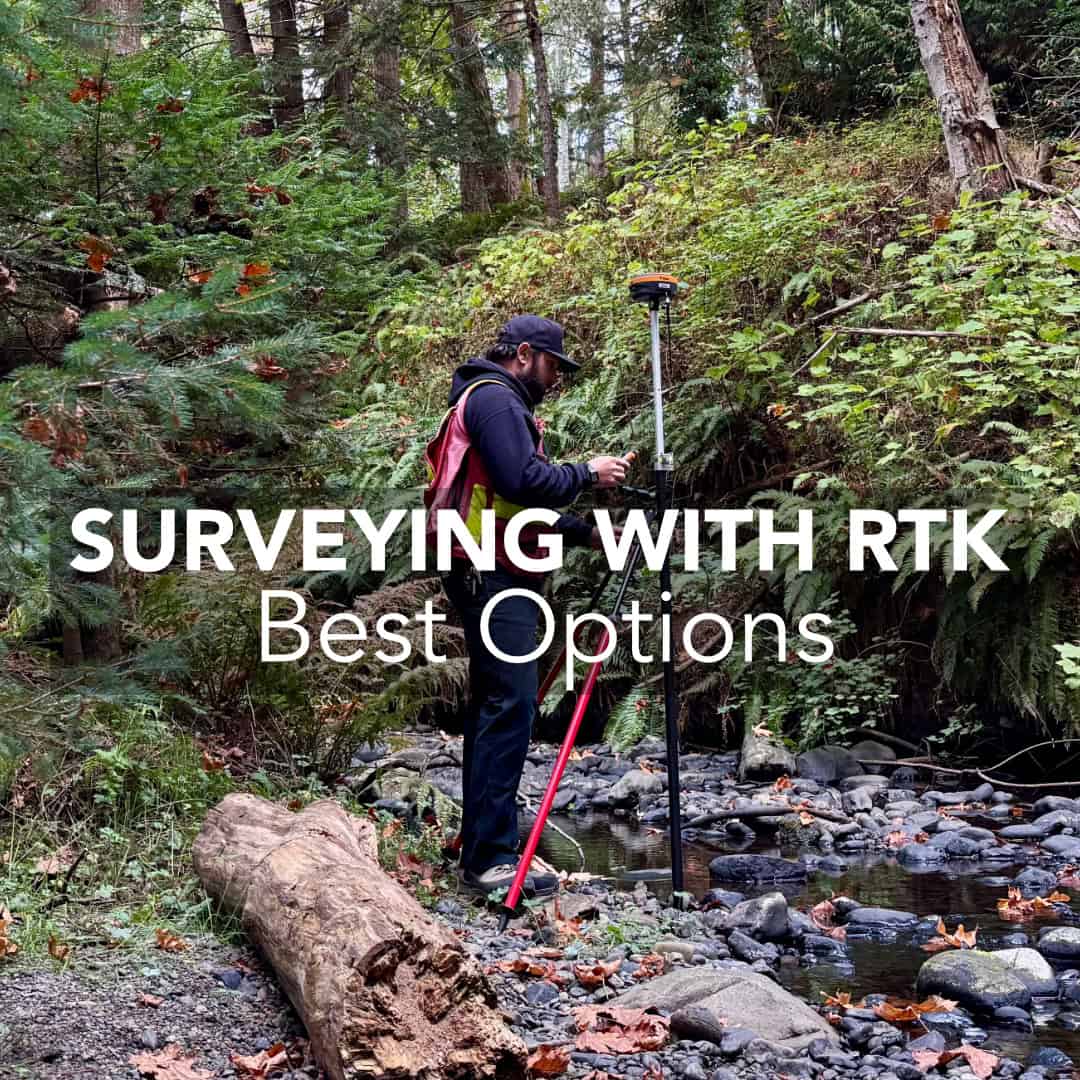
For land surveyors, civil engineers, and construction professionals working across Canada and the U.S., selecting the right RTK GNSS receiver is critical. A high-performance RTK GNSS receiver enables centimetre-level accuracy, fixes in challenging environments, and easy integration with your field workflow.
At Bench-Mark, we support clients online across both countries, so this guide is built for the cross-border professional who demands precision and full support without the localized dealer overhead.
Why RTK GNSS Receivers Matter
Key Selection Criteria for RTK GNSS Receivers
RTK GNSS and Total Station Integration
RTK GNSS Receivers We Offer
Why Our Focus is RTK, and Why It Matters for You
FAQs: RTK GNSS Receivers in the Field
Conclusion
In large-site layout, land development, rail or mining monitoring, and other engineering applications, the margin for error is extremely slim. An RTK GNSS receiver leverages real-time kinematic (RTK) correction data from a base or network. Canadian federal guidance confirms that RTK positioning can achieve sub-centimetre accuracy in relative space when properly configured.
Beyond accuracy, modern receivers deliver multi-constellation support and rugged field durability. These are all essential when working in tree canopy, urban zones, or extreme weather.
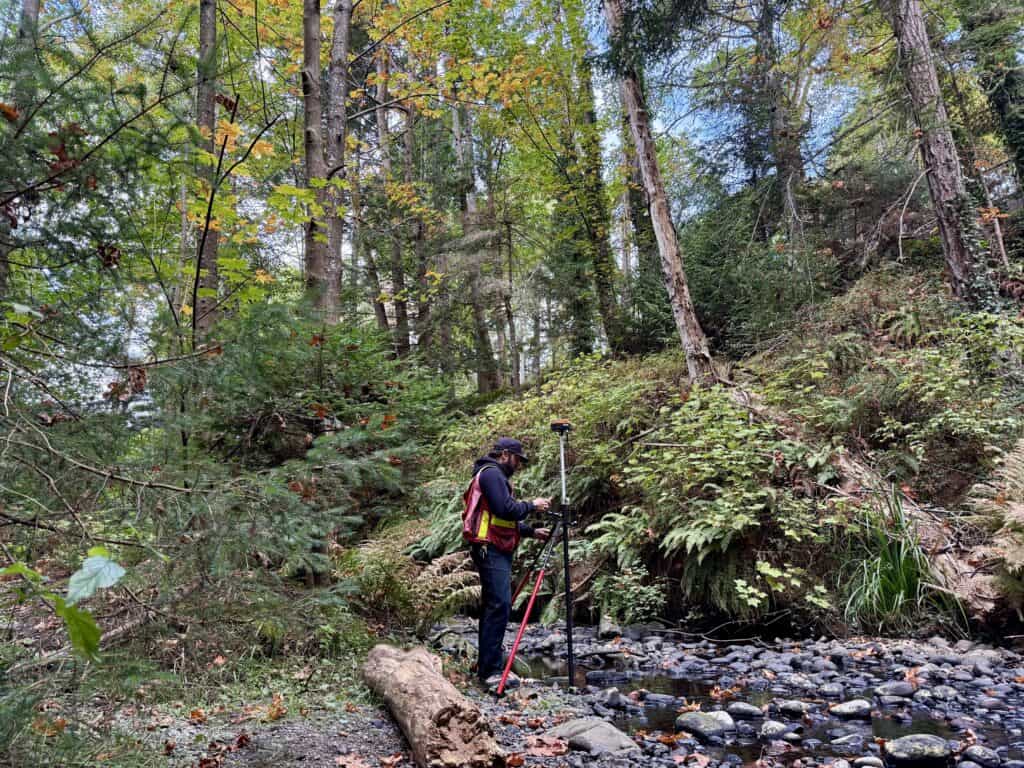
When choosing an RTK GNSS receiver for surveying, you should evaluate the following key factors:
Your receiver must support true RTK correction and deliver fast fix times under real-world field conditions. Canadian user-guidance recommends tracking a minimum of six satellites (seven when combining GPS+GLONASS) for best results.
Modern units support multiple constellations (GPS, GLONASS, Galileo, BeiDou) and multiple frequencies (L1, L2, L5) for improved accuracy and reliability.
Your survey equipment must survive real-world field conditions: wet Canadian weather, rough terrain, vibration, temperature extremes. Choose units rated for IP65/67 water/dust protection and robust shock/vibration.
Consider how the receiver communicates: UHF radio, cellular modem, Bluetooth/WiFi. Also check compatibility with your field controller software. Evaluate total cost of ownership: some manufacturers lock advanced features (multi-constellation, multi-frequency) behind activation fees.
Especially as an online-based supplier operating across Canada and the U.S., you’ll want to assure clients of rapid technical support and parts service. This is one of the areas where you can differentiate from local “car-dealership style” sub-dealers.
In modern surveying, integrating RTK GNSS receivers with total stations has become the standard for achieving both efficiency and precision. RTK systems excel at providing rapid, wide-area positioning. Total stations deliver accuracy in environments where satellite visibility is obstructed, such as dense urban areas, wooded regions, or construction sites with vertical interference.
Surveyors can combine both technologies and maintain complete data integrity across diverse site conditions. With advanced field software, users can transition between RTK and optical workflows for consistent coordinate systems, faster setup, and higher productivity in every phase of the project.
At Bench-Mark Equipment & Supplies, we provide a range of RTK GNSS receivers designed to deliver exceptional precision, reliability, and field efficiency for professional surveyors. Whether you’re mapping, monitoring, or managing construction sites, our lineup includes industry-leading options tailored to your needs.
The GeoMeasure Nano 7 is ideal for survey mapping and field mobility. Its small form factor ensures portability, and you get the same performance. The Nano 7 tracks the latest GNSS constellations to provide highly accurate positioning, even in challenging environments. For professionals seeking precision and convenience in one package, the Nano 7 delivers decent results wherever the job takes you.
Our best-selling Hemisphere S631 is built on the powerful Phantom P40 board, which supports all major constellations and signal types to maintain accuracy even in complex multi-path conditions. When paired with its advanced 60° tilt sensor, the S631 offers flexibility for demanding survey and construction applications. Hemisphere GNSS continues to push the boundaries of accessibility and precision, so users can survey sites once considered unreachable.
The Hemisphere S320 continues to be a trusted, high-performance receiver long after its release. Featuring Athena RTK GNSS engine technology, it delivers reliable accuracy and durability in the field. Every used S320 we offer undergoes rigorous inspection, testing, and refurbishment to meet our quality standards. The result is a cost-effective instrument that maintains peak performance and extends the legacy of Hemisphere’s engineering excellence.
At Bench-Mark we place RTK GNSS receivers at the top of our offering for several reasons:
Under optimal conditions with full constellation, multi-frequency tracking and good base reference data, surveying-grade RTK systems achieve errors on the order of a few millimetres horizontally and slightly more vertically. Canadian guidelines allow sub-centimetre accuracy in relative mode.
Yes, but performance depends heavily on the hardware’s tracking capabilities, multi-frequency/constellation support, and signal obstruction mitigation. Surveying under canopy remains challenging due to multipath.
It depends on your project demands, environment, and budget. High-end units deliver faster fix times, better performance in challenging conditions, advanced connectivity, and longer service life. Budget units may suffice for simpler tasks or as secondary rovers, especially if the line-of-sight is good and you have strong base corrections.
Don’t only consider the equipment price. Consider licensing fees (unlocking constellations/frequencies), software compatibility, upgrades, battery longevity, repair/support, and interoperability with your workflow. Some manufacturers charge extra for key features.
For surveying, land development, and engineering firms operating across Canada and the U.S., selecting the RTK GNSS receiver is an investment that drives project accuracy, productivity, and uptime. We specialize in supplying and supporting RTK GNSS receivers, backed by a commitment to open systems and real field support. If you’re ready to compare models, discuss your workflow, or get a tailored RTK GNSS receiver package, we’re here to help.
