

The Archer 4 Rugged Handheld is a durable, efficient solution for mobile data collection, designed to withstand harsh environments with its IP68 and MIL-STD-810H certification, offering Android 14 compatibility, customizable battery options, and 5G connectivity for reliable performance and seamless communication.

"*" indicates required fields
Product details
Package includes
The Archer 4 is built with Juniper’s signature ruggedness, and goes above and beyond industry standards. With certification surpassing IP68 and MIL-STD-810H, this device is engineered to withstand water, dust, debris, and shocks.
But durability is just the beginning. Juniper knows that usability is paramount, which is why the Archer 4 is designed for all-day comfort and convenience. Its ergonomic enclosure fits perfectly in your hand, reducing fatigue during long hours of use. The sunlight-readable display ensures crystal-clear visibility, even in bright outdoor environments. And with a battery life of up to 20 hours, you can tackle your workday with confidence, knowing that your device won’t let you down.
Powered by the reliable Android 14 operating system, the Archer 4 provides a stable platform for running your preferred data collection software. Whether you’re capturing data in the field or managing inventory in the warehouse, you can trust that the Archer 4 will seamlessly integrate into your workflow.
And when it comes to connectivity, the Archer 4 leads the way. With 5G cellular connectivity, you can stay connected to your team and access critical data in real-time, no matter where your work takes you. Say goodbye to connectivity issues and hello to uninterrupted productivity.
In summary, the Archer 4 Rugged Handheld is more than just a device—it’s a testament to engineering excellence. Discover the difference for yourself and unlock new levels of efficiency and reliability in your mobile data collection workflow.
Yes. The Archer 4 is designed as a rugged field handheld for data collection and can run Android mapping and survey applications. When combined with the optional GNSS expansion, it can also support sub-meter and RTK positioning workflows for higher-accuracy field mapping.
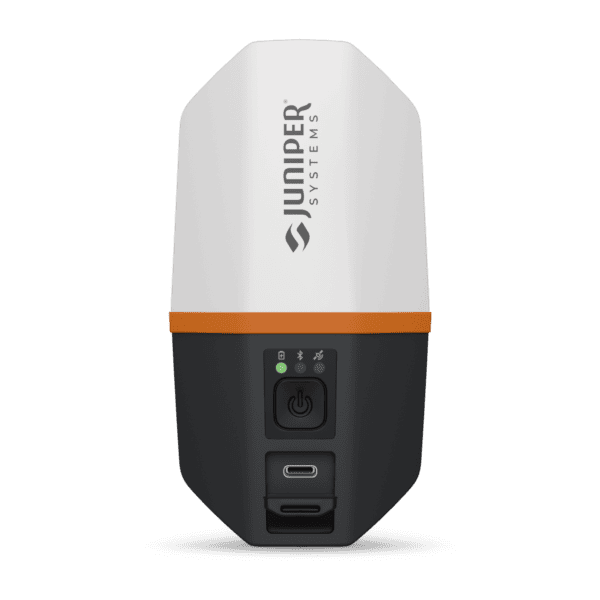
The standard Archer 4 is a rugged handheld, while the GNSS Expansion Pod is a separate expansion that adds the higher-precision GNSS capability. With the expansion installed, Juniper specifies sub-meter through RTK positioning and supports multi-constellation GNSS.
Yes. The GNSS expansion can connect to NTRIP/RTK correction services through the Archer 4’s cellular or internet connectivity. Juniper’s documentation specifies RTCM 3.x support and notes that NTRIP services require an internet or cellular connection and typically a service subscription.
Yes. Juniper provides documented workflows for connecting the Archer 4 GNSS expansion to both ArcGIS Field Maps and ArcGIS Survey123, including NTRIP/RTK correction workflows. The Archer Connect software is used to configure the GNSS expansion and establish the correction connection.
The Archer 4 uses a removable battery and is available with different battery capacities. Juniper’s specifications list approximately 8 hours or more with the 4,500 mAh battery and 18 hours or more with the optional 8,300 mAh battery, while the internal battery allows the main battery to be hot-swapped.
Yes. The Archer 4 includes an internal battery that supports hot swapping of the removable main battery. This lets field crews change batteries while maintaining power to the handheld rather than shutting down and restarting the device during a work session.
Yes. The Archer 4 is IP68 rated and designed to meet MIL-STD-810H test procedures covering conditions such as low and high temperatures, rain, humidity, sand and dust, vibration, and shock. Juniper specifies an operating range of -20°C to 60°C, which is particularly relevant for outdoor work across Canada’s varied climate conditions.
The Archer 4 supports 5G with 4G LTE fallback and dual Nano SIM slots, providing flexibility for connected field applications and NTRIP-based workflows. The supported cellular bands include several North American LTE bands, but coverage still depends on the carrier and the specific location where the device is being used.
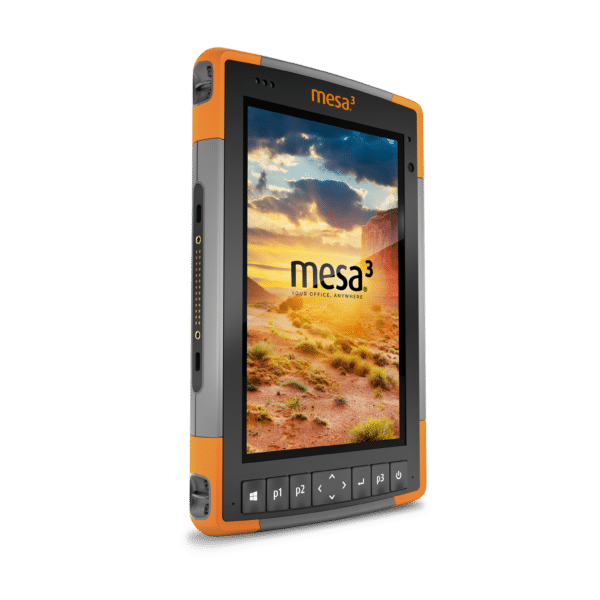
The main difference is form factor and operating system: the Archer 4 is a compact Android handheld designed for one-handed field use, while the Mesa 4 is a larger Windows tablet intended for workflows that benefit from a full desktop operating system and larger display. The Archer 4 is therefore better suited to lightweight mobile data collection, while the Mesa 4 is more appropriate when your software or workflow requires Windows.

Navigating the learning curve independently can be daunting, which is why we offer a solution to simplify your journey. Our program features twice-weekly training sessions designed to accommodate your schedule, making it ideal for onboarding new team members or resolving specific queries through live demonstrations on Zoom.
View Info
Learning a new software package can be daunting, but we have got you covered. That is why we created the Bench-Mark Survey Academy, where you can learn at your own pace. With over 15 hours of content in our library, you can access it on your own time and conquer new skills with ease. But don’t let that overwhelm you, it takes only 20 minutes to get up and running.
View Info


Reviews
There are no reviews yet.