

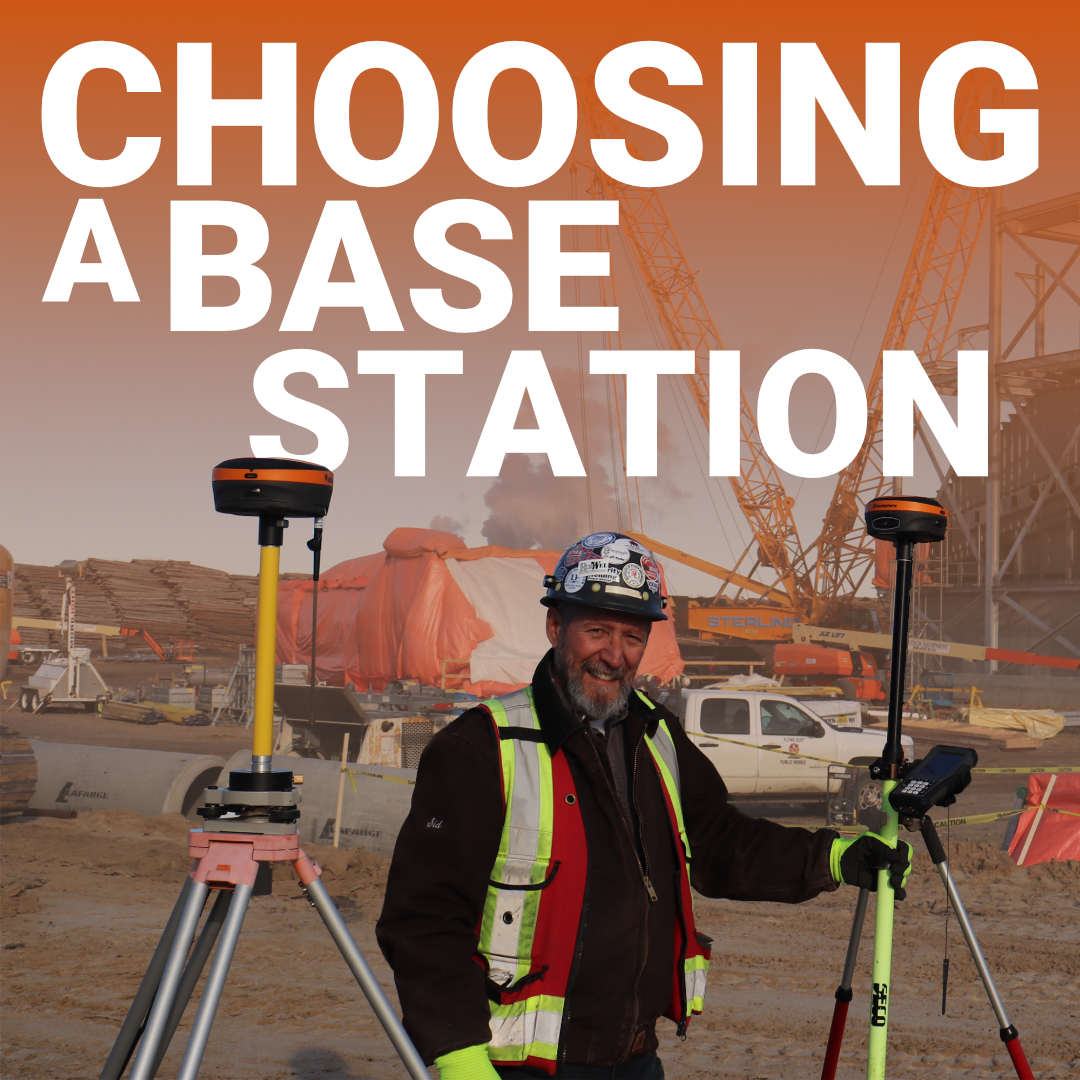
Canada presents unique challenges that make base station ownership more than a convenience. When you’re working on subdivision layouts in rural Alberta, monitoring projects in northern BC, or running control for highway expansions across the Prairies, you can’t afford to depend on spotty cellular service or hope the nearest NTRIP mountpoint is close enough.
The baseline reality: RTK accuracy degrades beyond 20 km from your correction source. In southern Ontario or the Lower Mainland, you might find NTRIP coverage. But venture into rural Saskatchewan, northern Quebec, or anywhere in the territories, and you’re on your own. A base station eliminates that dependency. You set it up exactly where you need it, and your rover gets the corrections it requires without guessing whether the internet will cooperate.
Cost is another factor. If you run multiple rovers across large sites, think land development projects, mining operations, or rail monitoring, paying per-device NTRIP subscriptions adds up fast. A single base station can serve several rovers within range, and that investment pays for itself within the first year of heavy use. Plus, unlike subscription services that can change terms or shut down without notice, your base station works as long as you maintain it.
What Makes a Good RTK Base Station
Matching the Base Station to Your Work
Integration with Your Existing Gear
Real-World Considerations for Canadian Conditions
What You Actually Need to Get Started
Accuracy You Can Count On, Anytime
Not all base stations are created equal, and choosing the wrong one will cost you in both accuracy and uptime. Here’s what separates field-ready equipment from gear that’ll leave you troubleshooting in February.
Your base station should track GPS, GLONASS, Galileo, and BeiDou. More constellations mean better satellite geometry, which directly improves the quality of your RTK corrections. This matters everywhere, but especially under canopy, near structures, or in cut-and-fill scenarios where part of the sky is blocked. Systems like the Hemisphere S631 give you full multi-constellation support out of the box, which means consistent corrections even when conditions aren’t ideal.
Single-frequency base stations are a compromise you don’t need to make. Dual-frequency (L1/L2) is the standard for professional surveying, but triple-frequency systems (L1/L2/L5) future-proof your setup and improve fix reliability in difficult environments. If you’re investing in a base station that’ll serve you for five to ten years, spend the extra money on multi-frequency capability now.
Your base station needs to send corrections to your rover somehow. The two main methods are radio link and internet transmission.
Radio works when you have line-of-sight between base and rover, typically up to 10-15 km depending on terrain and antenna height. This is your go-to for remote sites with no cellular coverage. For longer baselines or multi-rover setups, internet transmission through NTRIP casters like StormCaster lets you broadcast corrections over 4G, WiFi, or Ethernet. Choose a base station that supports both methods so you’re not locked into one workflow.
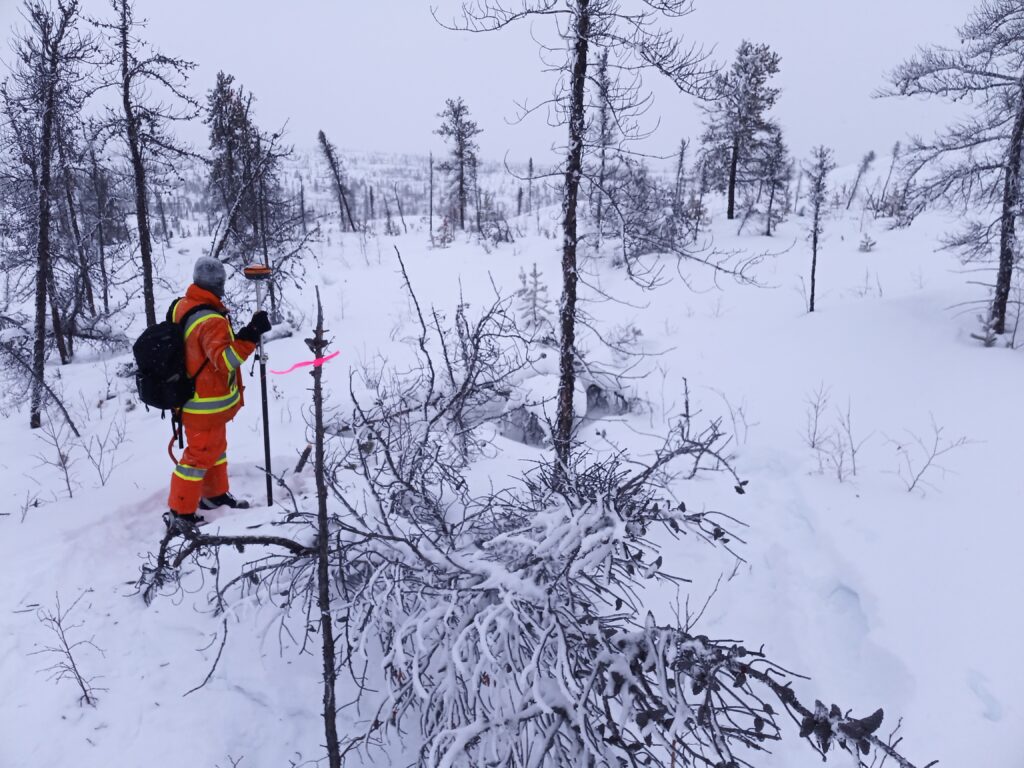
Canadian weather doesn’t care about your project timeline. Your base station will sit outside in -30°C windchills, summer heat, rain, and snow. Look for IP67-rated enclosures at minimum, with operating temperature ranges from -40°C to +65°C. If your base station can’t handle a January morning in Winnipeg or a July afternoon in the Okanagan, it’s not ready for fieldwork.
Most RTK surveys run all day, which means your base station needs to keep up. Internal battery systems should deliver at least 8-10 hours of continuous operation, with the option to connect external batteries or solar panels for extended monitoring jobs. Hot-swappable batteries are a bonus, swap power sources without losing your RTK base station or having to reinitialize.
The “best” base station isn’t universal. It’s the one that fits how and where you actually work.
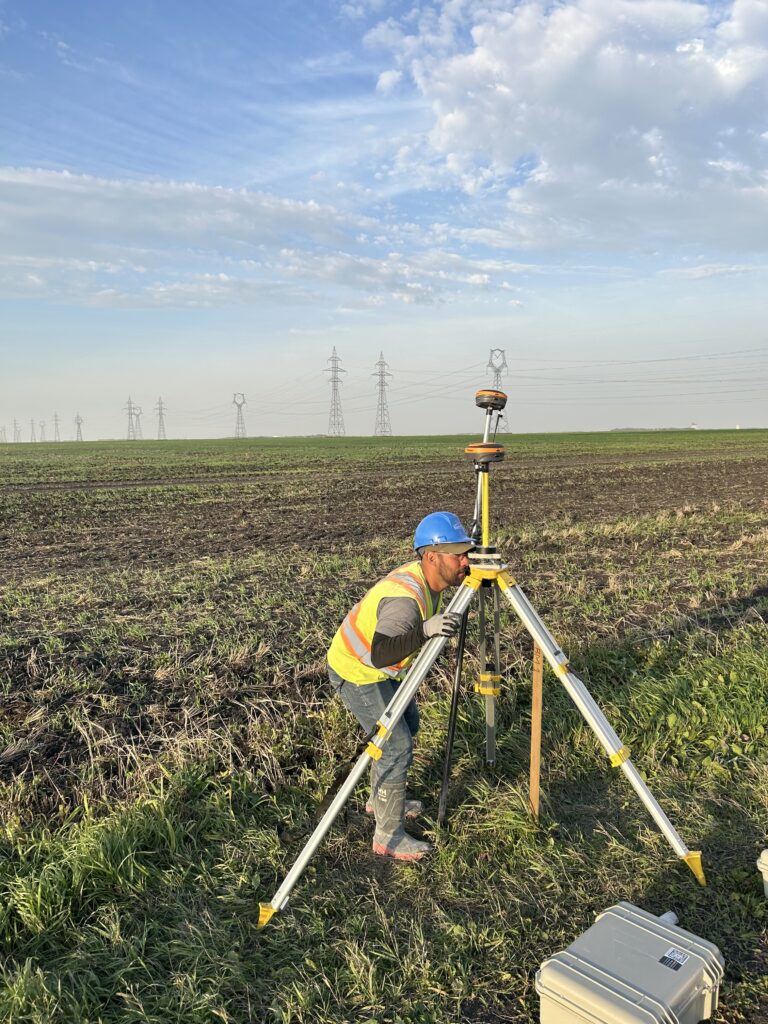
If you’re running subdivision layouts or site grading projects where you move the base station daily, portability matters. A compact, pole-mountable system like the S631 sets up fast, stores easily in your truck, and doesn’t require a dedicated case or two people to carry. Pair it with a lightweight tripod and you’re operational in minutes.
For long-term monitoring, rail deformation, structural movement, or environmental projects, you want a geodetic-grade antenna with exceptional phase stability and a base station that can run unattended for weeks. Prioritize systems with remote diagnostics and reliable power options like solar or hardwired setups.
Working in dense canopy or urban environments? Multipath rejection becomes critical. Choose a base station with a choke-ring or ground-plane antenna that minimizes reflected signals. Cheap antennas might save you money up front, but they’ll cost you in fix reliability and post-processing headaches.
Your base station doesn’t work in isolation. It has to integrate cleanly with your rover, data collector, and survey software.
Most surveyors in Canada run FieldGenius, which means your base station needs to communicate properly with that software stack. The Hemisphere S631, for example, pairs seamlessly with FieldGenius and applies the correct phase center offsets automatically. If your base and rover are from different manufacturers, double-check compatibility and make sure firmware updates won’t break that connection mid-season.
Radio systems need matched frequencies. If you’re using UHF radios, confirm they’re licensed correctly for Canadian spectrum regulations. Some older systems use frequencies that require a license from Innovation, Science and Economic Development Canada (ISED). Non-compliance isn’t worth the risk, invest in systems that meet Canadian radio standards or use internet-based correction delivery instead.
Lithium batteries hate extreme cold. If you work through winter, choose a base station with cold-weather battery options or plan to insulate your power source. Some systems include heated battery compartments; others require external solutions. Either way, test your setup in actual winter conditions before you’re three hours into a job and the base shuts down.
Wind is a bigger problem than most surveyors expect. A base station antenna swaying in a 40 km/h chinook introduces movement that degrades correction quality. Use a stable tripod or mount the antenna on a fixed structure when possible. For long-term installations, consider a concrete monument or driven ground rod rather than a tripod.
Always log raw base station data, even if you’re running RTK. If you lose radio link or your rover drops fix, you can post-process later using PPK workflows. Make sure your base station has enough internal storage or supports logging to an external SD card or USB drive.
A complete base station setup runs anywhere from $8,000 to $15,000 depending on features and ruggedness. That’s a significant investment, but it pays back quickly if you’re running multiple rovers, working in remote locations, or billing for high-accuracy control work.
Choosing the right RTK base station for Canadian surveying comes down to understanding your workflow, your environment, and what you’re willing to depend on. If you work in areas where NTRIP coverage is unreliable, if you run multiple rovers, or if you need absolute control over your correction source, a base station is essential.At Bench-Mark, we’ve equipped surveyors across Canada with base stations built for the conditions you actually face. Our team understands the trade-offs between portability and stability, radio and internet, and cost versus capability. We’ll help you choose a system that works the first time and keeps working, because downtime in February is lost money.
