

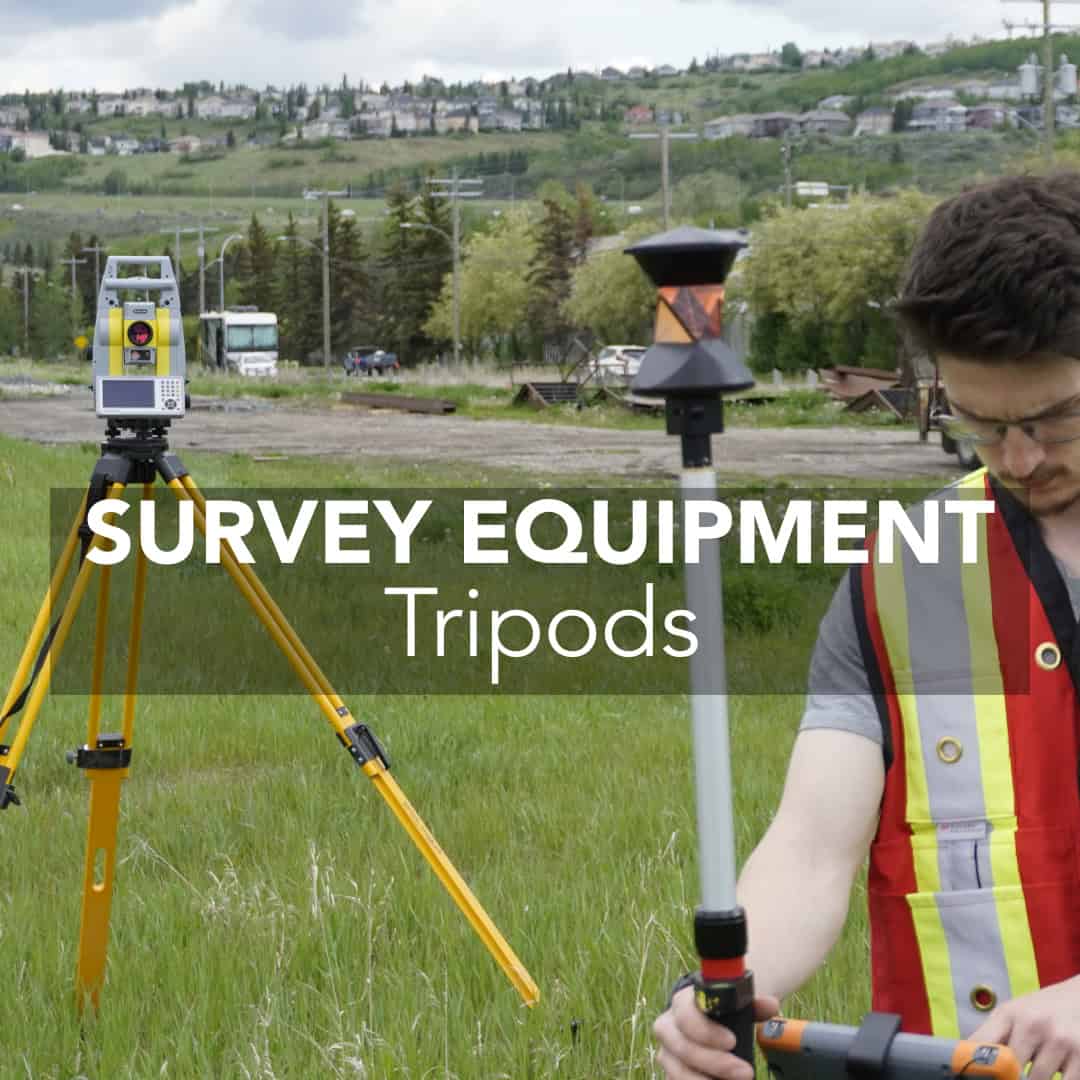
Choosing the right surveying tripod is one of the easiest ways to improve accuracy in the field, yet it’s also one of the pieces surveyors overlook most often. A tripod is a stand for your total station, GNSS antenna, or scanner, and the foundation everything else depends. If the tripod isn’t stable, nothing mounted on it will perform the way it should. So what actually matters when choosing a surveying tripod, and how to pick the right one for Canadian weather, terrain, and day-to-day field demands?
Why the Surveying Tripod Matters
Tripod Materials: What Works Best in Canadian Conditions
Understanding Stability: What Really Affects Your Accuracy
Matching the Tripod to Your Workflow
Height, Weight, and Portability
Features That Actually Make a Difference in the Field
Tripod Durability and Weather Resistance in Canada
When to Replace Your Surveying Tripod
Final Thoughts
Your tripod is the anchor of your entire setup. Even the best GNSS receiver or total station can drift, vibrate, or lose accuracy if the tripod flexes or shifts. Canadian conditions make this especially important. Frozen ground, uneven rock, and seasonal temperature swings can all push a cheap or poorly chosen tripod past its limits. A high-quality surveying tripod gives you:
Surveyors often upgrade their instrument before upgrading their tripod, but stability usually starts at the legs, not the optics.
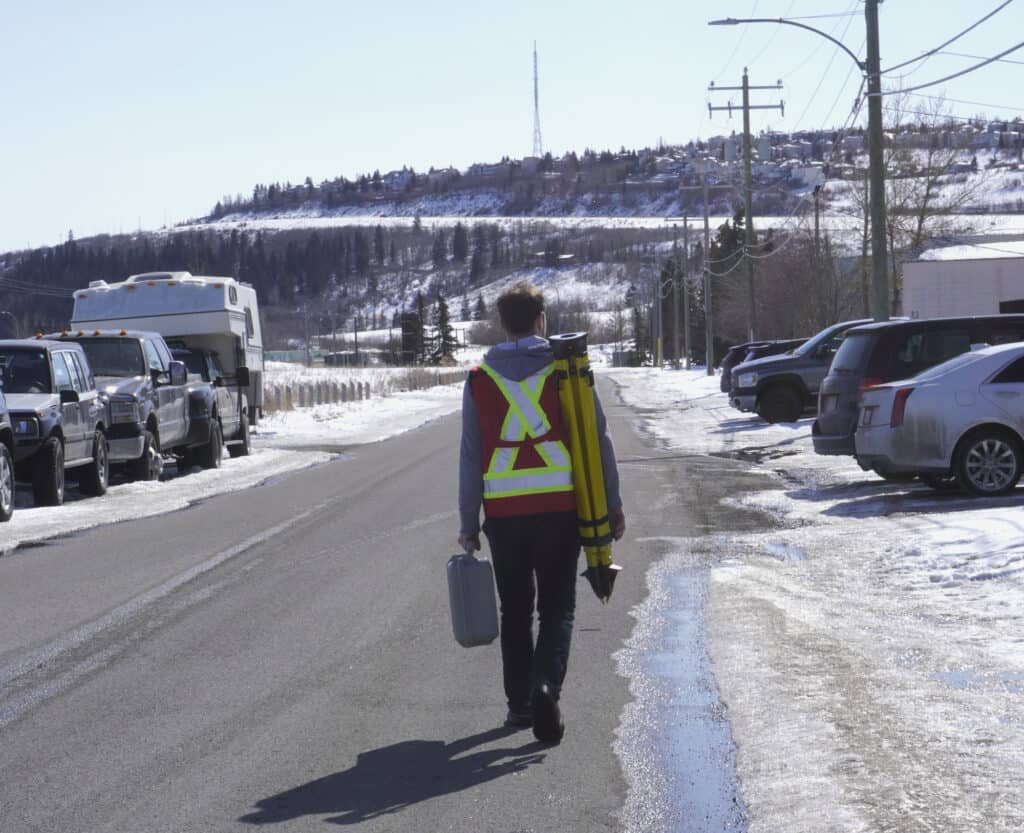
Tripod material affects stability, weight, weather resistance, and long-term durability. There’s no one best material. Your choice depends on your workflow and the environments you work in.
The following comparison also gives you a quick way to weigh surveying tripod cost against the stability and field performance each material provides.
| Material | Weight | Vibration Dampening | Temperature Sensitivity | Best-Fit Instrument | Typical Cost Range |
| Wood | Heavy | Excellent | Low | Total stations, precision optical instruments | About $200–$700 CAD |
| Aluminum | Light to moderate | Moderate | Higher | GNSS receivers, general field setups | About $200–$400 CAD |
| Wood-Fiberglass | Moderate to heavy | Good to excellent | Low | GNSS and total stations, mixed workflows | About $250–$600 CAD |
Wood has been trusted for decades because it naturally dampens vibration better than any other material. This matters in high-precision total station work or when working near roads or heavy equipment. The trade-off is weight. Wood is heavier, and it can absorb moisture if not properly sealed. Still, for surveyors working in colder regions, wood’s thermal stability is a major advantage over aluminum.
Aluminum is ideal when mobility is your priority. It’s lightweight, easy to carry over long distances, and quick to set up. The downside is temperature sensitivity. Metal expands and contracts significantly in Canada’s climate, which can introduce small movements in precision setups. Aluminum also transmits vibration more easily, so it’s better suited to GNSS bases than high-precision optical instruments.
Wood-Fiberglass delivers the best combination of durability, temperature stability, and weather resistance. It doesn’t warp in heat or cold, doesn’t absorb moisture, and handles vibration better than aluminum. This makes it a strong all-around choice for Canadian surveyors working in mixed terrain or switching between GNSS and total station work.
Stability is about how the tripod performs once it’s set up. Canadian field conditions can be unforgiving, so the tripod needs to stay locked in even when temperatures drop or wind picks up.
For a more objective way to evaluate tripod stability, look for products designed or certified to ISO 12858-2. This international standard specifies requirements for telescopic tripods used with surveying instruments, including GPS equipment, and covers the connection between the instrument and tripod. For precision total station or scanner work, an ISO-rated tripod can provide an additional benchmark when comparing products.
When you’re running a robotic total station or scanning from a single setup, any movement in the tripod shows up in your data.
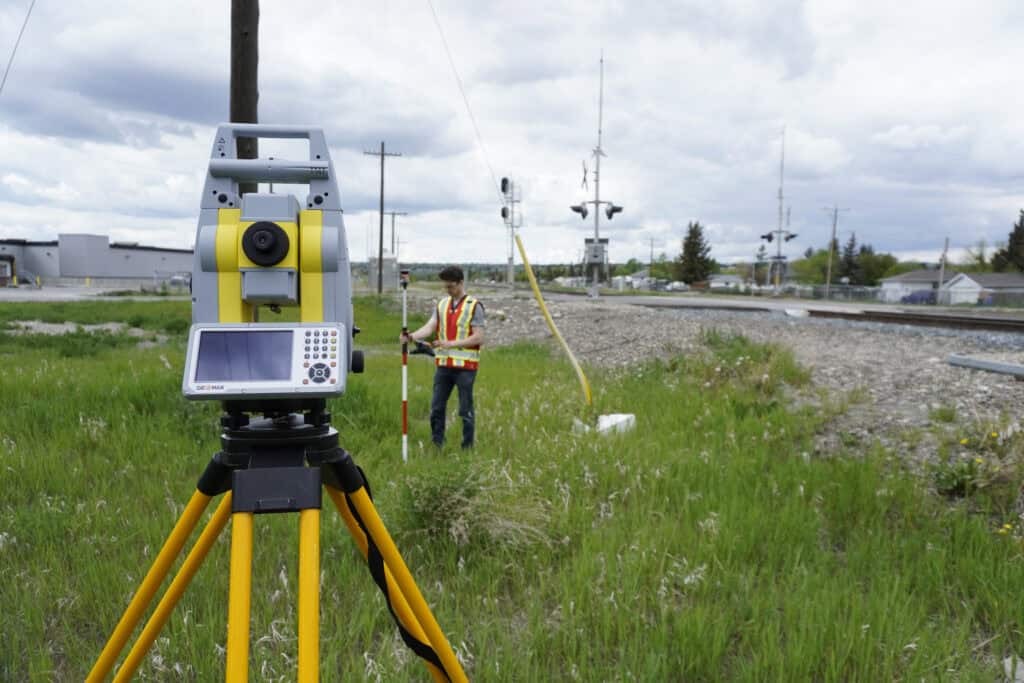
Choosing the right tripod starts with where and how you work. A tripod that performs well in urban construction isn’t always the one you want on rocky slopes or frozen northern ground.
Lightweight aluminum or wood-fiberglass tripods are usually enough. GNSS doesn’t require the same vibration resistance as optical instruments, so portability often wins here, especially when carrying gear between multiple setups.
Stability becomes non-negotiable. Wood or fiberglass tripods are the better fit, especially on windy, busy, or vibration-heavy sites.
Fiberglass provides the most consistent performance across seasons. It handles cold snaps, moisture, and rough terrain without warping or shifting.
A tripod needs to be tall enough to give your instrument a clear view while still staying stable at full extension. In Canada, where surveyors work across slopes, ditches, compact urban corners, and forested clearings, adjustability matters.
Most surveying tripods provide an extended working range of roughly 3.5 to 6 feet. Extra-tall models can extend beyond that when an elevated setup or an obstructed line of sight requires additional height.
You’ll want a tripod that extends high enough for clear line-of-sight, collapses compactly for transport, and locks securely even with gloves on in winter
Weight is also a trade-off. Heavy tripods improve stability but slow you down when you’re hiking through a forested site or hauling equipment across a subdivision. Lightweight tripods move faster but need careful setup in windy or unstable terrain.
There’s a lot of marketing fluff around tripod features. Most surveyors only need to focus on a few practical details that measurably influence stability and usability.
These are the features that matter most when you’re running precision instruments in unpredictable terrain.
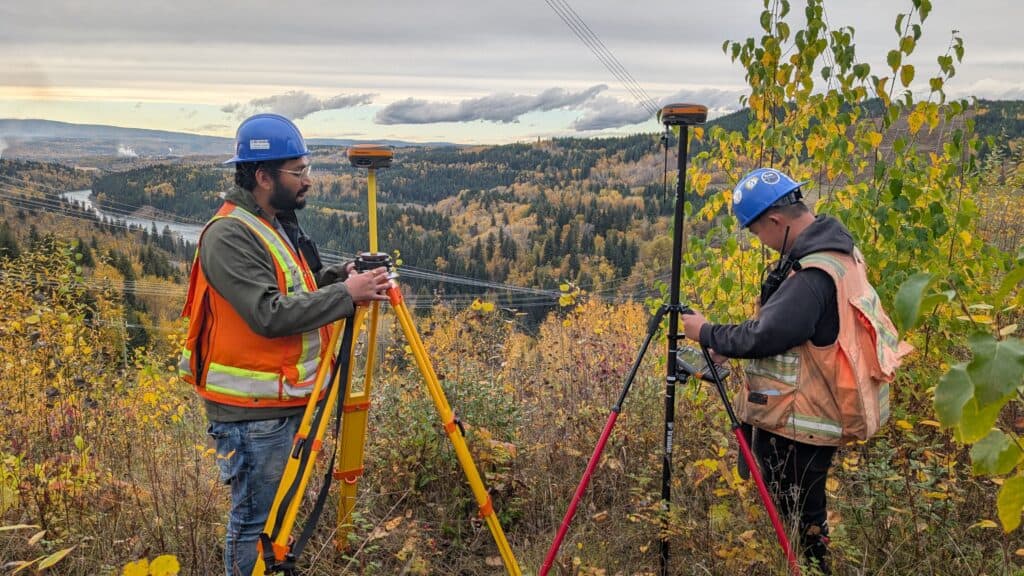
Cold temperatures, moisture, UV exposure, and rough handling all take a toll. A poorly-built tripod can warp, loosen, or fail surprisingly quickly in Canadian weather. Wood needs sealing, fiberglass needs good bonding, and aluminum needs corrosion resistance. Clamps and hardware should remain easy to lock in winter, even when snow and mud get into the threads.
If you work year-round, build durability into your decision. A weather-resistant tripod costs less over time than replacing a cheaper one every couple of seasons.
Material, construction quality, intended instrument, and certification all affect surveying tripod cost.
Premium certified models are designed for applications where stability and repeatability matter more than minimizing the initial surveying tripod price.
The cheapest tripod isn’t always the best value. For precision total stations or scanners, investing more in stability can help reduce movement, rework, and unreliable measurements. For lighter GNSS setups, a less expensive aluminum tripod may be sufficient when portability is the priority.
Tripods last a long time, but not forever. If your instrument drifts more than usual or you’re fighting with leg locks every few setups, the tripod may be the culprit. Common signs it’s time to replace:
A tripod that can’t stay locked in place will cost more in rework than a new one ever will.
There isn’t one best material for every application. Wood offers excellent vibration dampening and temperature stability for precision optical instruments. Aluminum is lighter and works well when portability is important, particularly for GNSS setups. Wood-fiberglass provides a balance of stability, durability, and weather resistance for mixed workflows.
A typical surveying tripod has an extended working range of roughly 3.5 to 6 feet. Choose a height that provides a clear line of sight without requiring the tripod to operate unnecessarily close to its maximum extension. Extra-tall tripods are available for elevated or obstructed setups.
Not always. GNSS setups can generally use lightweight aluminum or wood-fiberglass tripods when the application prioritizes portability. A heavier, more stable tripod becomes more useful when the setup is exposed to wind, uneven terrain, or other conditions where movement could affect the equipment.
A good surveying tripod can cost roughly $200–$300 CAD at the entry level, while mid-range wood-fiberglass models can cost several hundred dollars. Premium professional and ISO-rated models can reach approximately $600–$1,200 or more, depending on the construction and intended application.
Your surveying tripod is the foundation of your accuracy. The right one improves stability, reduces vibration, and keeps your total station or GNSS setup performing the way it should. If you match your tripod’s material, build quality, and features to the conditions you work in, it becomes a long-lasting, reliable part of your kit, not something you think about only when it fails.
