

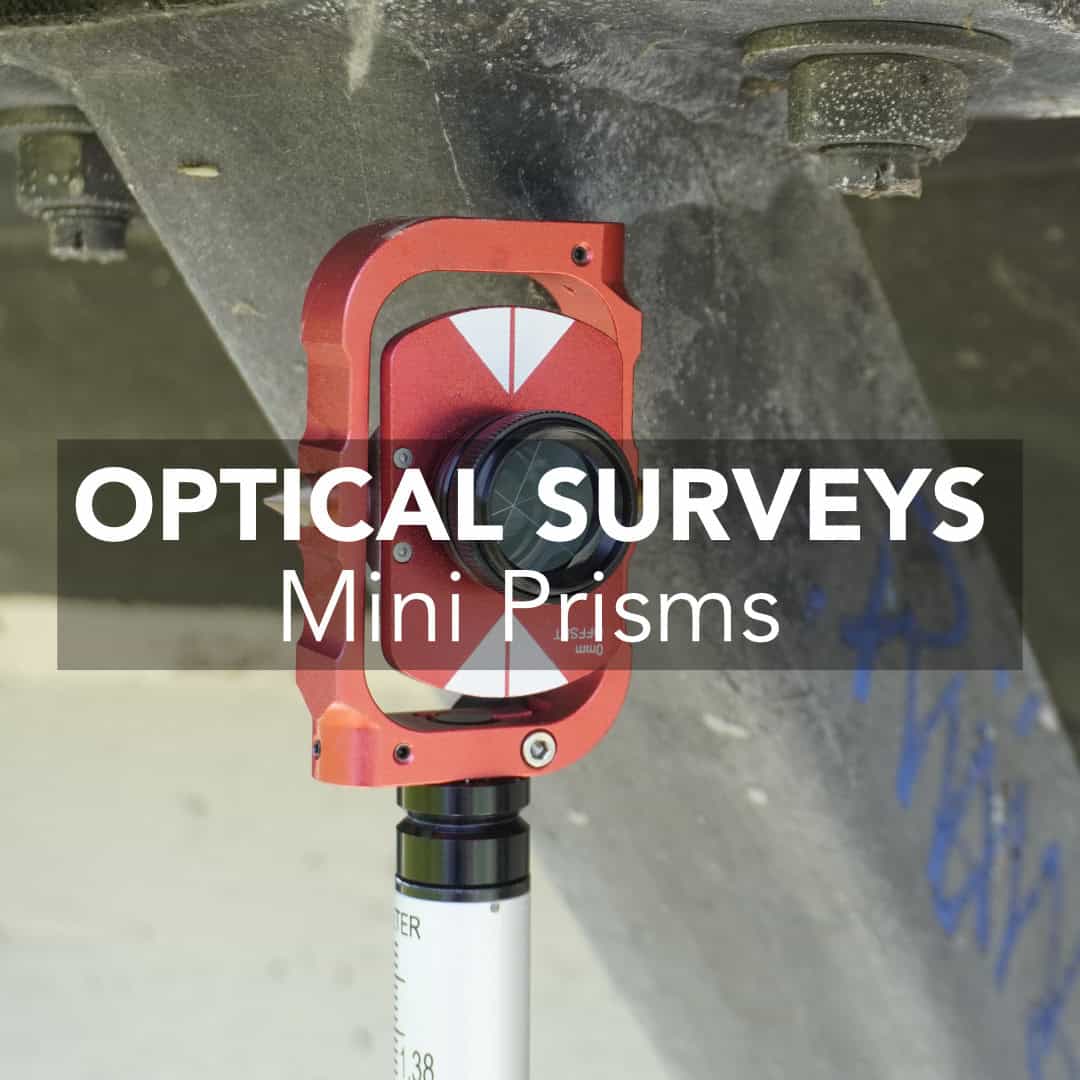
A mini prism is a compact, high-precision optical target used with a total station to measure distances and angles over short to medium ranges. Mini prisms offer stability and precision in confined or obstructed environments such as construction sites, tunnels, or urban areas. Their smaller size reduces setup error and enables precise positioning for control surveys, deformation monitoring, and alignment work.
Mini Prisms in Modern Surveying
What Is a Mini Prism?
How a Mini Prism Works
When Should You Use a Mini Prism?
Advantages of Using Mini Prisms
Setting Up and Using a Mini Prism
Choosing the Right Mini Prism
Common Mini Prism Applications in Canada
Conclusion: Why Mini Prisms Still Matter
FAQs
Precision and reliability are the foundation of any successful survey, and the tools you choose can make the difference. Among these tools, mini prisms play a key role in ensuring accurate distance and angle measurements, particularly when space is limited or satellite visibility is poor. Mini prisms enable surveyors to maintain high accuracy without standard prisms.
RTK GNSS continues to evolve, and total stations paired with mini prisms remain unmatched for precision work in dense urban sites, construction layouts, and monitoring applications.
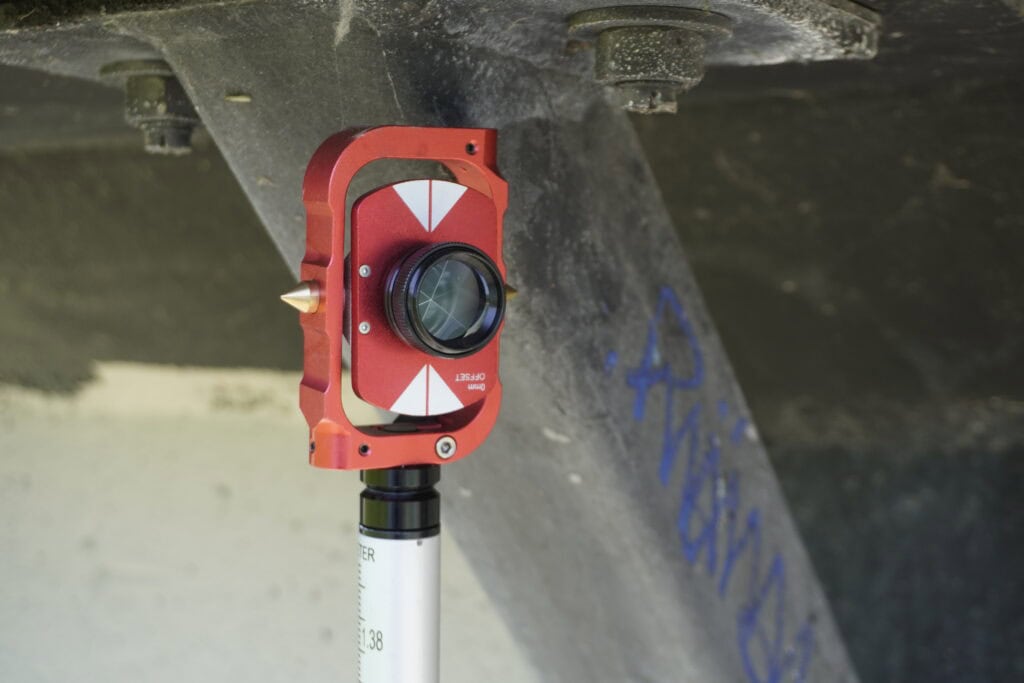
A mini prism works by reflecting the infrared or laser beam emitted by a total station back to the instrument, so that it can calculate the distance based on the beam’s return time.
Compared to standard prisms, mini prisms are smaller in size (typically between 25 mm and 40 mm) and are optimized for short to mid-range work. They perform well in environments where space is tight or where high mobility is required. A mini prism typically consists of:
Despite their compact size, mini prisms can deliver millimetre-level accuracy when properly aligned and configured.
Mini prisms operate on the principle of retroreflection — the ability to reflect a beam of light directly back to its source. When the total station emits an infrared or laser signal, the mini prism redirects that signal precisely along its incoming path. The total station then measures the time delay between emission and return, calculating the distance with extreme precision.
The total station compensates for the prism constant, a small offset based on the physical geometry of the prism. For most mini prisms, this constant ranges from +17.5 mm to +30 mm, depending on the model and manufacturer.
Mini prisms are best suited for short- to mid-range applications where precision, stability, and mobility are essential. Common scenarios include:
Compact and easy to handle, mini prisms are perfect for foundation layout, curb placement, or utility alignment in busy or confined areas.
Mini prisms can be permanently mounted on structures to monitor movement or deformation in bridges, tunnels, and retaining walls. Their small size minimizes interference with site operations.
In areas where GNSS signals are unreliable, such as under trees, near tall buildings, or in tunnels, total stations with mini prisms maintain full accuracy and performance.
For establishing or checking control points, mini prisms provide reliable and repeatable measurements with millimetre precision.
Because they are affordable and lightweight, mini prisms are widely used in educational and training environments for teaching total station techniques.
Mini prisms deliver several key advantages over standard prisms and other measurement methods:
These features make mini prisms one of the most practical tools in a modern surveyor’s kit.
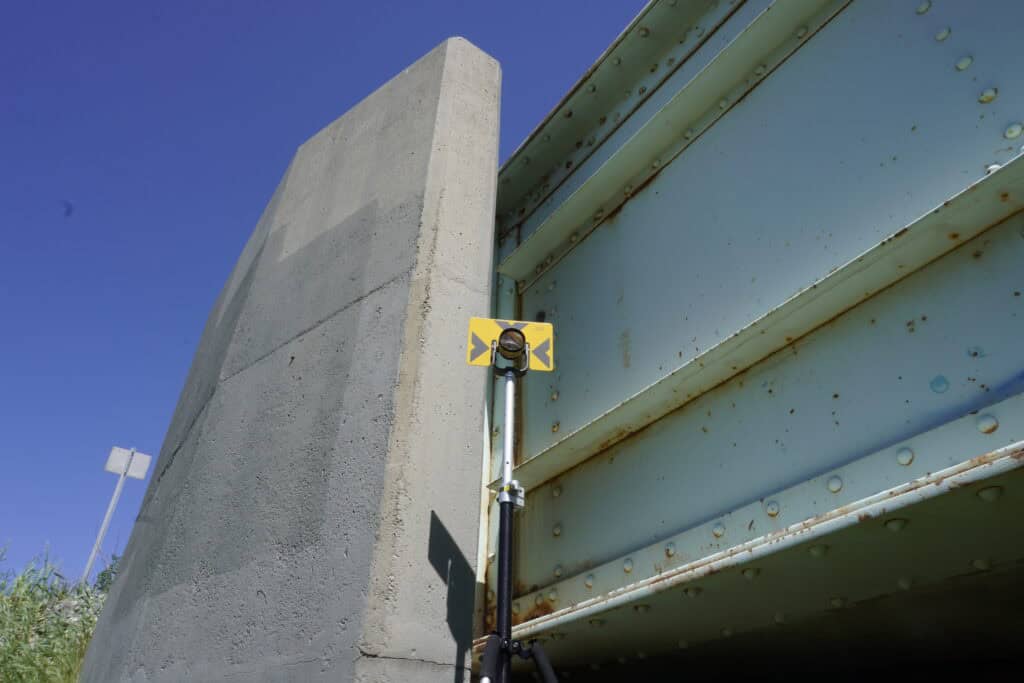
To get accurate results, setup is key. Follow these best practices:
Confirm that your total station’s prism constant matches your prism’s specification (e.g., +17.5 mm or +30 mm).
Use the built-in bubble or a tribrach to keep the prism perfectly level.
Avoid obstacles that could block or reflect the signal.
A solid mini pole, tripod, or wall mount helps reduce vibration and maintain accuracy.
Take repeat measurements to verify consistency, especially for critical control points.
Selecting the right mini prism depends on your total station setup, site conditions, and measurement range. First, think of constant compatibility. Every total station model requires a specific offset to achieve correct distance readings. For instance, a Leica-compatible mini prism may use a +17.5 mm constant. A Trimble-compatible one might use +30 mm.
Next, consider your surveying environment. For tight construction sites or monitoring projects, choose a smaller prism (25-30 mm diameter) with a durable metal or copper coating to withstand daily wear and temperature swings. If you often work outdoors or in challenging conditions, a prism with weatherproof housing and a stable mount, such as a tribrach or mini pole, will improve accuracy.
Think about mounting style and workflow as well. For quick setups, magnetic or threaded mini prisms are efficient. For long-term monitoring, use fixed mounting kits that maintain position over months or years.
Choosing a mini prism that matches your total station, workflow, and environment can bring you to reliable data and fewer re-measurements, which is going to save time and improve productivity in the field.
Mini prisms are used across a range of Canadian industries, including:
Mini prisms remain indispensable for surveyors who demand precision and flexibility. Their compact design, adaptability, and proven reliability make them ideal for short-range, high-accuracy applications across Canada’s diverse environments.
At Bench-Mark, we provide a range of mini prisms, poles, and accessories for total stations, supported by expert advice. The right mini prism setup will help you measure faster, safer, and with confidence.
Mini prisms are small optical targets used with total stations to measure distances and angles precisely, especially in confined or close-range settings.
When properly aligned, mini prisms can achieve millimetre-level accuracy at ranges up to several hundred metres.
Yes. High-quality mini prisms, such as copper-coated or sealed models, are designed to perform reliably in cold, wet, and variable climates across Canada.
