

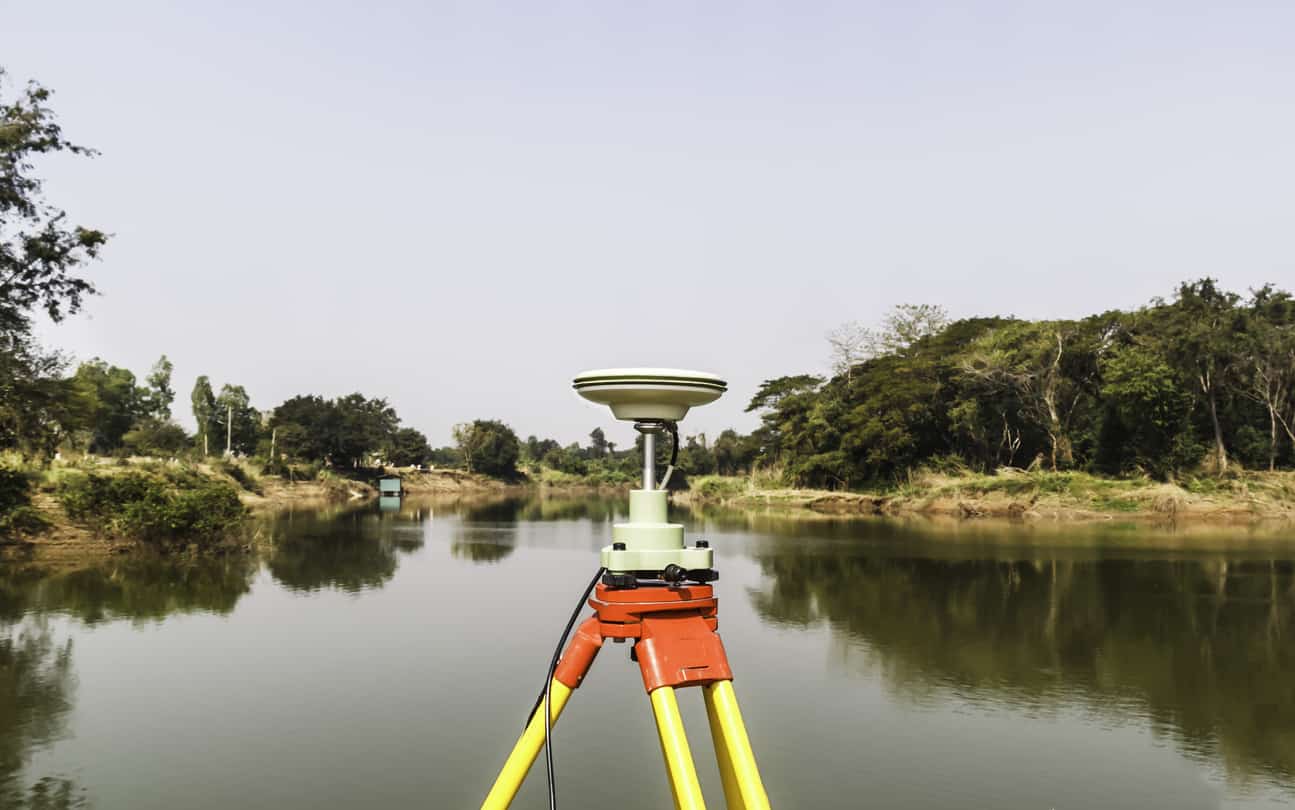
In the wide world of GPS surveying equipment, it is important to understand why this helpful technology exists. Before globalization swept the world, it made a lot of sense for surveyors and their equipment to exist. The world was largely untamed, and governments needed to know what was within their holdings.
So, in our interconnected and modern society, what are we using GPS surveying equipment for? Well, several different types of surveying, actually. Understanding what is surveying and knowing the different survey types available helps you choose the right approach before work begins. Below, we look at the five most common types of surveying activities that we still do today.
When evaluating the best approach, it’s important to remember that each survey method supports a specific objective rather than competing for the top spot. The best option depends on factors like project scale, land conditions, and regulatory requirements. For example, a boundary survey is ideal for defining property lines. A topographic survey works well at mapping surface features. It proves that different methods solve different challenges within the broader types of land survey used today. There are several types of surveys used across the industry, and choosing between them starts with understanding your project’s specific needs.
Modern RTK systems allow surveyors to work with speed and accuracy across all these types of land survey, meaning the most effective method is often the one that aligns with your project’s goals, timeline, and compliance needs.
The boundary survey is the most frequently requested type of land survey, confirmed across multiple industry sources. It’s the survey most property owners encounter directly, since it establishes legal lot lines and corners before a sale, a fence installation, or new construction can move forward.
| Survey Type | Primary Purpose | Typical Equipment Used | Who Commissions It |
| Site Planning Survey | Combines boundary and topographic data for design layout | RTK GPS, total stations | Developers, architects |
| Topographic Survey | Maps surface features and elevation changes | RTK GPS, GNSS receivers | Government agencies, developers |
| Subdivision Survey | Divides land into lots and defines utility placement | RTK GPS, total stations | Government agencies |
| Boundary Survey | Locates property lines and corners | Total stations, RTK GPS | Property owners, buyers, lenders |
| Construction Survey | Guides builders on design and grading | RTK GPS, total stations | Builders, developers |
| ALTA/NSPS Survey | Standardized boundary/title report for transactions | RTK GPS, total stations | Lenders, title companies |
| Geodetic Survey | High-precision measurement across large areas | GNSS receivers | Government agencies, infrastructure projects |
| Hydrographic/Bathymetric Survey | Maps underwater terrain and depth | GNSS receivers, sonar equipment | Port authorities, marine contractors |
| As-Built Survey | Documents completed construction against design plans | RTK GPS, total stations | Developers, property managers |
Site planning surveys are typically a combination of several elements in boundary and topographic surveys.
They are very helpful in designing stores, community areas, houses, schools, commercial buildings, primary and secondary roads, and much more.
These surveys typically rely on RTK GPS and total stations to capture both boundary and terrain data in a single effort.
Example: a developer planning a new retail center would use a site planning survey to confirm lot boundaries and grading needs before submitting design plans for approval.
A topographic survey is used to determine the topographical features on a parcel of land. This might include hills, streams, elevation changes, contours, trees, fences and buildings.
Typically, these surveys are made use of by local, provincial and federal government agencies when planning future development and property boundaries.
Surveyors use RTK GPS or GNSS receivers to capture elevation data quickly across large sites.
Example: a municipality planning a new road extension might commission a topographic survey to map existing terrain before finalizing the route.
The subdivision survey is used to divide a tract of land into lots, estates and commercial space. These surveys also play a crucial role in determining sewer, power and water line placement.
Usually, these particular efforts are commissioned and used by the government, which tracks and records the information for later use. RTK GPS and total stations are the standard tools for marking new lot lines accurately.
Example: a subdivision survey would be used when a developer converts a single rural parcel into a residential neighborhood with multiple lots.
When people think of modern surveying, the boundary survey is likely what they are thinking about.
This survey locates the boundaries and corners of a particular lot or parcel of land. It requires researching both historical records and field research and is essential to future development efforts.
Total stations and RTK GPS are both commonly used to confirm corner locations and property lines in the field.
Example: a homeowner installing a new fence would commission a boundary survey to avoid encroaching on a neighbor’s property.
Our final survey type, construction surveys, is useful for upgrades to existing structures. These types of surveying options help builders and developers understand how to follow the design and blueprint instructions.
This is also where grading decisions may be made. RTK GPS and total stations are used throughout construction surveys to stake out design points and verify grading.
Example: a construction crew building a new commercial structure would rely on a construction survey to ensure the foundation aligns with the approved blueprint.
An ALTA/NSPS survey combines boundary, topographic, and title-related information into a single standardized report that meets American Land Title Association and National Society of Professional Surveyors requirements. Lenders and title companies typically require it for commercial real estate transactions where financing or title insurance is involved.
A geodetic survey accounts for the curvature of the earth to measure large areas with high precision, unlike standard plane surveys that treat the earth’s surface as flat. Government agencies and large infrastructure projects rely on geodetic surveys to establish control networks spanning long distances.
A hydrographic (or bathymetric) survey measures the depth and physical features of bodies of water, including riverbeds, lakebeds, and coastal areas. Port authorities, dredging operations, and marine construction projects commission these surveys to map underwater terrain.
An as-built survey documents the actual, completed dimensions and locations of a structure or site after construction is finished, comparing them against the original design plans. Developers and property managers use as-built surveys to confirm compliance and to maintain accurate records for future renovations.
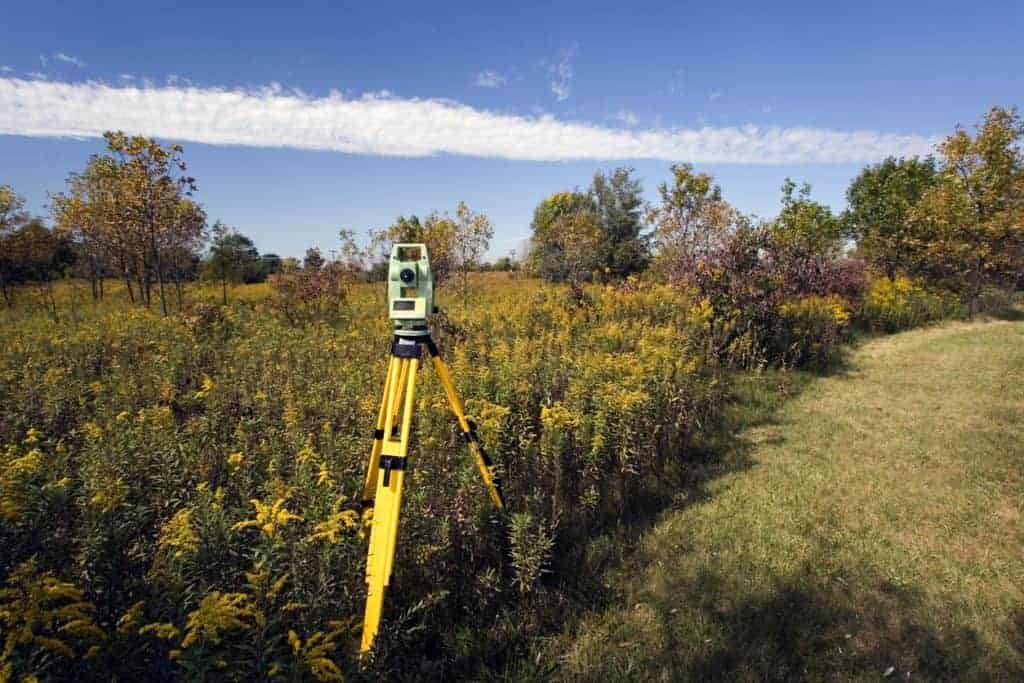
In reviewing the different types of land survey, a pattern has started to emerge; namely, that each of these surveys performs a different function. As a result, deciding which one of these is “best” can be fairly problematic.
Instead, it is best to consider the needs of your projects. Several of these types of land survey may be necessary before the completion of your job, so don’t let yourself get pigeon-holed into one particular type of survey. If you have any questions about the right equipment to use, as well as troubleshooting and product information, please contact us today. We look forward to hearing from you.
Whether doing construction or topographic surveys, it is essential to have the right equipment. Contact us today to see how we have the right solutions for all your surveying needs!
Most home purchases require a boundary survey to confirm property lines and corners before closing. If your lender requires title insurance as part of the transaction, they may also request an ALTA/NSPS survey.
A boundary survey establishes the legal lines and corners of a property, while a topographic survey maps the physical features of the land, such as elevation changes, contours, and existing structures. The two are often used together, but they answer different questions about a site.
Land survey costs vary based on the type of survey, the size and condition of the property, and local regulatory requirements. Contact Benchmark directly for a quote specific to your project.
Bench Mark Equipment & Supplies is your team to trust with all your surveying equipment. We have been providing high-quality surveying equipment to land surveyors, engineers, construction, airborne and resource professionals since 2002. This helps establish ourselves as the go-to team in Calgary, Canada, and the USA. Plus, we provide a wide selection of equipment, including global navigation satellite systems, RTK GPS equipment, GNSS receivers, and more. We strive to provide the highest level of customer care and service for everyone. To speak to one of our team today, call us at 403-286-0333 or email us at [email protected]
